Key Takeaways
- The rigid vs flexible packaging choice is no longer just about materials, it’s about costs, sustainability, logistics and brand strategy
- How flexible packaging and rigid packaging perform against real-world factors such as protection, shelf life and transportation
- Common myths, trade-offs and future trends that influence the use of rigid and flexible packaging today
- A practical framework to help you determine whether a flexible packaging material or an example of rigid material is a better fit for your product
Rigid Packaging vs Flexible Packaging: What is the difference?
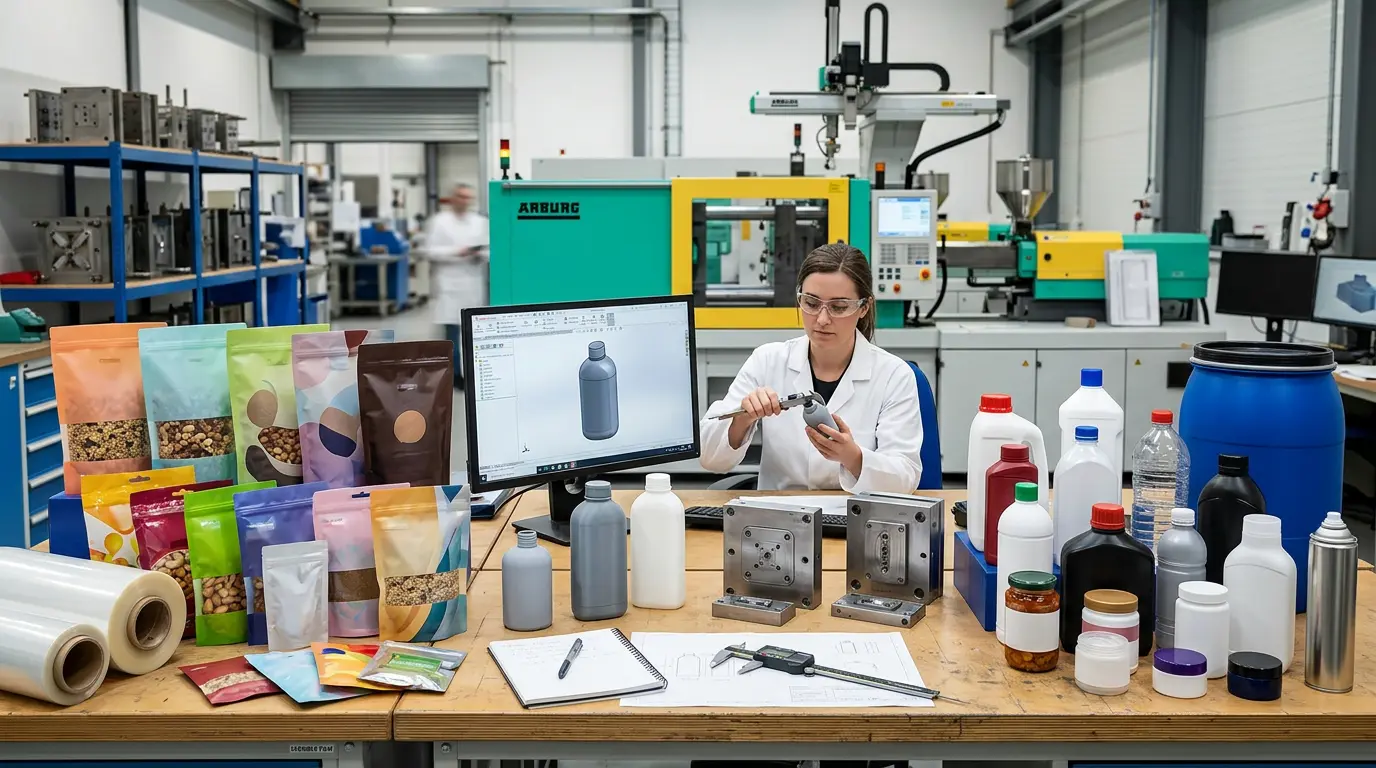
The rigid vs. flexible packaging debate is about more than materials. It’s the way brands find that balance point between operational efficiency, protection, sustainability and consumer expectations.” At first blush the difference between this 2 is simple, one changes to fit, the other keeps its shape. In reality, the decision between rigid and flexible formats impacts everything from manufacturing cost to logistics performance to shelf impact.
Flexible packaging is generally made from a light weight flexible packaging material such as films or laminates. This makes flexible packaging efficient for transportation and use in high volume applications. Rigid packaging , however , is about shape and strength . Rigid materials are glass, metal or rigid plastics such as PET or HDPE.
But more than form, for brands and manufacturers who really understand packaging, it’s how each format supports product integrity, scalability and long-term business goals that makes the difference.
What is Flex Packaging?
Flexible packaging is a packaging material, which is light weight, strong and easy to transport. It can be made from a variety of materials including plastic, paperboard, aluminum and foil and often combines multiple of these layers to create a strong and durable package. Flexible packaging is produced in a variety of formats such as bags, pouches and rollstock and is widely used to package food, beverages and other products. Flexible packaging offers many benefits over traditional rigid packaging like plastic bottles and metal cans. It is smaller, so it is cheaper to ship and better for the environment. It can also be more convenient for consumers, as it can often be resealed and may be easier to store in tight spaces. However, there are some disadvantages of flexible packaging. Rigid packaging may be easier to recycle than flexible packaging and some flexible packaging may be more expensive to manufacture. Flexible packaging is not necessarily the best option for all product types, such as those requiring a high level of protection or stability. Flexible packaging is generally a versatile and efficient type of packaging that has become increasingly popular in recent years. In the future, flexible packaging may become even more important as consumers become more concerned about the environment and the impact of packaging on the planet.
When we talk about flexible packaging we generally mean the flexible packaging formats not the packaging designed to take a fixed shape. The flexible packaging material of these packs can be bent, folded or compressed without any impact on the product inside. Flexible solutions are the popular choice in the wider debate of hard vs soft packaging, as they fit naturally into fast-moving and efficiency-driven supply chains.
One of the key advantages of flexible packaging is the performance and convenience. It is less material intensive than hard packaging and easier to ship, and it gives brands the opportunity to experiment with shapes and designs without massive tooling changes.
Flexible packaging materials include for example:
- Wraps and pouches are often made from plastics such as PE and PP films
- High barrier multi-layer laminates to moisture and oxygen.
- Aluminum Foil Uses For Shelf Life
- Sustainability goals for paper-based flexibles in special applications
Flexible packaging offers operational flexibility and efficiency advantages over rigid packaging.
What is Rigid Packaging?
Rigid packaging is a format of packaging which is designed to maintain its shape from start to finish. They are not easy to bend or flex . That is what makes them so valuable for many applications . In the broader rigid versus flexible packaging debate, rigid formats are often chosen where strength, stability and a stronger shelf presence are the main considerations.
Rigid packaging feels more structured and reliable than flexible packaging. Products that need extra protection during handling, long distance transport or storage. It also tends to work well in premium positioning where look, feel and durability matter.
Example of a Rigid Packaging Material
- glass – common in drinks, fragrance and pharmaceuticals
- metal – common in food cans and aerosol packaging, e.g. aluminum or steel
- hard plastics – Food, personal care and household categories widely use hard plastics including PET and HDPE
All rigid product applications have a purpose and companies can balance the benefits of protection, presentation and efficiency with the right mix of rigid and flexible packaging solutions.
Side by Side Comparison of Flexible vs Rigid Packaging
One way to get a good comparison of rigid vs. flexible packaging is to see what the two formats do to meet real-world packaging requirements. Other global packaging leaders like Amcor, Berry Global, Sealed Air, Huhtamaki, Mondi Group, Sonoco, Tetra Pak, Smurfit Kappa and UFlex generally make packaging decisions based on performance benchmarking rather than defaulting to one format.
Here is a comparison of rigid versus flexible packaging on key parameters:
- Material efficiency: Flexible packaging uses significantly less raw material since structures are thinner and rigid packaging uses thicker walls to provide shape and strength.
- Logistics and warehousing: Flexible packaging reduces shipping weight and warehouse space but, in contrast, rigid packaging increases pallet volume and transportation cost per unit while providing stacking stability.
- Product protection: Rigid packaging provides better mechanical protection especially for fragile or pressurized products. This is fought by flexible packaging with advanced barrier layers that protect against moisture, oxygen and contamination.
- Operational scalability Design changes to flexible packaging can be made more quickly and volume changes can be scaled more rapidly than rigid packaging, which often has longer tooling lead times.
This comparison demonstrates that the decision between rigid and flexible packaging is an application, scale and supply chain priority issue, not just a format issue.
Cost/Production Efficiency
In the case of choosing between rigid and flexible packaging, cost is often a function of efficiency. Flexible packaging uses less raw material, shorter manufacturing cycle and less transportation cost, thus it is suitable for high volume production. Rigid packaging costs more in materials and tooling but provides a certain level of consistency and durability to certain products that makes the cost worthwhile. In practice, the choice of the rigid vs. flexible formats is a tradeoff between the initial manufacturing cost and the long term operational efficiency.
Sustainability and Environmental Impact
The sustainability debate between rigid and flexible packaging is often not black and white and plays a big part in this. Flexible packaging usually has a smaller carbon footprint, uses less material and generates fewer emissions during transport. Established recycling streams also serve rigid packaging well, especially for materials such as glass and metals – a case study in getting rigid right. Ultimately, the environmental impact of rigid and flexible packaging is determined by the choice of material, the recyclability infrastructure and the package design throughout its entire life cycle.
Shelf Life & Product Storage
Product safety is an important factor and the choice of rigid or flexible packaging is very important. Rigid packaging gives good physical protection to fragile products, pressurized products or liquid products that may be handled and transported. Flexible packaging, however, is a concern for barrier performance. Advanced flexible packaging material structures provide barrier to moisture, oxygen and contamination which directly supports shelf life. Brands can often successfully combine rigid and flexible solutions, selecting the format that best suits the protection needs, distribution conditions and desired shelf life.
Branding, Design and Client Engagement
The most obvious example for consumer visibility is flexible versus rigid packaging. Flexible packaging provides great design freedom with large printable surfaces, bold graphics and the ability to quickly change to new branding or promotional changes. And that’s what makes it especially attractive for fast-moving categories. Rigid packaging, in contrast, often has more physical presence on the shelf. Its structure, weight, finish convey quality and permanence, sometimes premium value. In practice, brands balance rigid and flexible formats depending on how they want products to look, feel and emotionally connect with consumers at the point of purchase.
Logistics, Storage and Transportation
Storage and logistics are often the achilles heel of the rigid vs flexible packaging debate. Flexible packaging is light weight and space efficient, so you can ship more units per pallet and reduce warehousing and transportation costs. It is very attractive for global distribution. Rigid packaging is bulkier, but more stable for stacking and better protects against crushing during shipment. But for a lot of supply chains, the choice between rigid versus flexible packaging boils down to freight efficiency versus handling safety, especially in long-haul or multi-distribution touchpoint shipping.
Rigid or flexible packaging: which is the best?
In the case of flexible vs. rigid packaging, it’s easier to consider a few important decision factors rather than the format itself:
- Type of product:
Rigid packaging is often used for fragile, pressurized or liquid products. Flexible packaging is often used for dry, semi-liquid or refill products.
- Produced by
High volume SKUs may benefit from the material efficiency of flexible packaging material, whereas lower volumes may justify the more rigid formats.
- Regulatory and compliance:
Some food, pharma or aerosol regulations might prefer examples of rigid material such as glass or metal.
- Market positioning:
Premium brands tend to be very unflexible, while value or sustainability-led brands often prefer more flexibility.
The framework allows brands to make the rigid vs flexible packaging decision in a clear way.”
Flexible Packaging vs. Rigid Packaging: What is Better for Industries
Industry | Flexible Packaging – Best Fit | Rigid Packaging – Best Fit |
Food & Beverage | Ideal for snacks, dry foods, sauces, and ready-to-eat products where lightweight flexible packaging material improves logistics efficiency and shelf life | Used for beverages, dairy, and products needing strong structure or long-term storage |
FMCG & Household Care | Suited for sachets, refills, and high-volume SKUs where cost efficiency is critical | Preferred for cleaners or chemicals requiring leak resistance and stability |
Personal Care & Cosmetics | Works well for refill packs, travel sizes, and fast-moving products | Common for premium cosmetics where rigid packaging enhances brand perception |
Pharma & Healthcare | Used for single-dose packs and pouches with barrier protection | Chosen for bottles and containers needing precise dosing and protection |
Aerosols & Chemicals | Rarely used due to pressure limitations | An example of rigid material like metal is essential for safety and compliance |
This comparison suggests that the choice of rigid or flexible packaging is more related to the product and industry needs rather than preference.
Myths about Flexible and Rigid Packaging
Much of the discussion around rigid vs. flexible packaging is based on old assumptions rather than how packaging actually performs in today’s supply chains. Let’s take a look at some of the more common myths on either side and see what the real story is.
Myths about flexible packaging
One common idea is that flexible packaging isn’t strong enough. In fact, modern flexible packaging material is designed with advanced barrier layers to protect against moisture, oxygen and contamination. Another myth is that flexible formats are unsustainable in themselves. Recycling infrastructure is different in different regions, but flexible packaging often uses a lot less material and energy than rigid packaging and so it can have a smaller overall carbon footprint.
Packaging Rigidity Myths
Conversely, rigid formats are often perceived as inherently premium or more sustainable. Rigid packaging can provide structure and shelf presence, but the premium value is in the design, not the format. Rigid packaging also uses more raw material, and more energy to ship. Things like glass or metal are a good example of a rigid material that has established recycling streams.
With this knowledge, brands will be able to rise above the myths and make informed decisions regarding choosing between rigid and flexible packaging.
How to Assess Packaging for Your Product Line?
The right packaging choice begins with a systematic approach, especially in terms of rigid vs flexible packaging. Here’s a simple step-by-step checklist to get clarity:
- Product Technical Specs
Consider the sensitivity, shelf-life needs, fragility and whether the product is more suitable for rigid packaging or more sophisticated flexible packaging materials with barrier properties. 5.
- Market & Brand
Think about the customer, the price and the shelf placement. Some markets react better to rigid format structures and others to the convenience of flexible packaging.
- Regulatory & compliance requirements
Investigate food, pharmaceutical or chemical regulations that could necessitate a specific example of rigid materials or certified flexible structures.
- Logistics and Distribution
Consider transportation distance , storage space and handling conditions to balance rigid packaging efficiency with flexible packaging efficiency .
This systematic evaluation gives you the knowledge and confidence to make packaging decisions.
Regulatory/Compliance
The regulations are very important for both rigid and flexible packaging, particularly when the product is sold in different regions. Packaging must be safe and help you run your operation efficiently.
Here are some things to keep in mind:
- Compliance with food safety
Food contact regulations are important for both flexible and rigid packaging in an effort to prevent contamination and increase shelf life. Here material selection and barrier performance are important.
- Pharmaceutical regulation
Pharmaceutical packaging requires strict controls on stability, hygiene and traceability. Usually for protection and accuracy a hard material like glass or certified hard plastics is preferred.
- International regulation convergence
Different markets have different rules for labeling, recyclability and use of materials.” Early assessment ensures compliant (rigid and flexible) packaging solutions across regions.
Early adoption reduces risk, avoids redesigns and can help enable smoother global distribution.
Future trends: Flexible packagings to substitute rigid packagings?
The future of rigid vs flexible packaging is not one format replacing the other, but smarter evolution. Markets are changing and both formats reacting in huge ways.
The main trends to the future are:
- Innovations in materials
Advanced flexible packaging material is improving recyclability and barrier performance, while rigid formats are becoming lighter and more resource efficient.
- Mixed solutions
To balance protection, convenience and sustainability, many brands combine rigid and flexible elements, like rigid containers with flexible lids or refill packs.
- Smart packaging tech
Traceability, freshness indicators and connected packaging are now being introduced in both flexible and rigid packaging formats.
The trend is toward thoughtful integration, not replacement, of the right format for the right application.
Conclusion
When it comes down to the debate of rigid vs flexible packaging, there is no winner – and that’s the point. Both rigid and flexible packaging are critical to today’s supply chains. The “right” choice depends on the context: product requirements, production volumes, regulatory needs, sustainability goals, and brand positioning.
Lightweight flexible packaging material is sometimes the most efficient and flexible option. Others require the support and security of an example of unbending material like glass or metal. Many brands have been successful in combining rigid and flexible formats; they are adapting solutions throughout their product lines rather than attempting to force a one-size-fits-all solution.
The best packaging decisions are made when you step back and look at the big picture – technical, commercial and operational.
Having trouble with these choices? Got a tip? Talk to our packaging experts. With a consultative, data-driven approach, you’ll find packaging solutions that perform today and scale confidently for tomorrow.
FAQs
- Is flexible packaging a complete replacement of rigid packaging?
Well, not exactly. The discussion between rigid and flexible packaging is a discussion between what is suitable for many products and certain products where rigid packaging is required where strength, pressure resistance or structure are required.
- Rigid vs. Flexible Packaging – Which Is Better for Your Product?
Start with product requirements, regulations, volume and market position. The right mix of rigid and flexible packaging will depend on how your product is manufactured, shipped and used.
- What is the effect of packaging choice on transport cost?
Flexible packaging is lighter and smaller, lowering freight and storage costs. The packaging is more cumbersome but gives a better level of protection for the product during transport.
- Is flexible packaging strong enough to carry food?
Yes. Today’s flexible packaging material provides excellent moisture and oxygen barrier protection for a wide variety of food applications.
- Rigid packaging is more expensive than flexible packaging
Yes, on many occasions. In general, rigid packaging is more expensive than flexible packaging regarding material, tooling and transportation.
- Some examples of rigid packaging materials
Typical examples of rigid materials include glass, metal cans, and rigid plastics such as PET and HDPE.
- The main difference between rigid and flexible packaging
It is the material it is made from. The difference is largely one of structure. Rigid packaging maintains its shape while flexible packaging takes the shape of the product.
- Flexible Packaging or Rigid Packaging: Which One Is More Sustainable?
Sustainability is made of design and infrastructure. Flexible packaging often uses less material but rigid packaging has established recycling systems.
- Best packaging for shelf life?
Either one can work. Rigid packaging gives good physical protection for long-term storage. Barrier Layers Essential for Flexible Packaging .
- Why do FMCG brands opt for flexible packaging?
FMCG brands like flexible packaging because it’s economical, lightweight and easy to scale, and offers a lot of flexibility for visual branding.