Key Takeaways
- Why Global Mold Health Management Has Become Essential for Multi-Plant Manufacturers Molds: From Reactive Tools to Strategic Global Assets
- Standardized oversight, lifecycle tracking and performance data play a role in transforming consistency, uptime and quality throughout the Mold Life cycle.
- Where organizations often struggle and the early warning signs that it’s time for a structured mold health strategy.
This guide will show you how global tooling governance is a competitive advantage, not just a maintenance upgrade.
What is global mold health management?
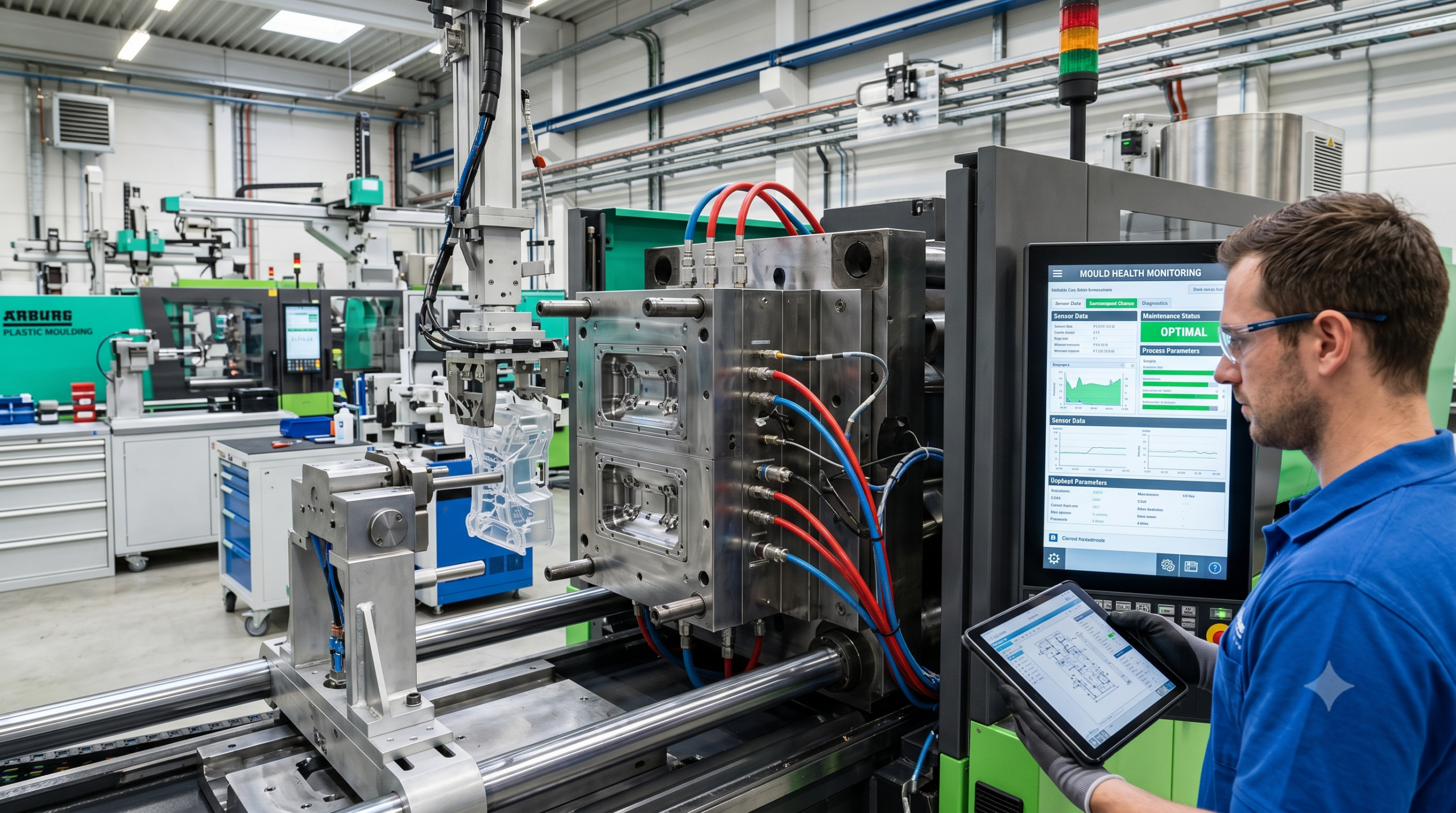
In today’s manufacturing environments, and particularly those that span multiple plants and geographies, tooling performance can’t be managed locally or reactively. Global Mold Health Management is a systematic centralized approach to monitor, maintain and optimize the performance of molds across facilities to ensure consistency, quality and operational stability.
Molds are important production assets for organizations with multiple plants. Varying standards of maintenance, performance monitoring and lifecycle tracking can result in inconsistent output, higher scrap rates, unexpected downtime and reduced tool life. Global Mold Health Management is a common platform for monitoring tooling health, and thus mitigating these risks.
This guide will discuss what mold health really means, how it affects productivity and quality and how managing molds strategically across their entire lifecycle reduces operational risk whilst improving long-term efficiency.
Mold health in manufacturing – What you must know
In practice, for manufacturing, Mold Health means the operating condition, performance stability and structural integrity of a mold during production. It directly impacts:
- Repeatability, dimensional
- Uniformity of surface finish
- Cycle time stability
- rates of error
- Maintenance frequency
- Overall output quality
Good molds always produce parts within tolerance. However, compromised molds result in variability leading to scrap, rework and inefficiencies in production.
Effective Mold Health Management is not so much about fixing the problem when it occurs, but more about continuous assessment. The entire life of the mold is monitored, including wear patterns, cooling efficiency, accuracy of alignment and structural fatigue.
What Is “Mould Health” Anyway?
Mold Health is not just a physical condition, but three basic dimensions:
- Status
The physical condition of the mold, including wear, corrosion, surface damage and alignment of components.
- Size
The mold’s capability to produce parts consistently to the specified tolerances and cycle time targets.
- Preparation
Its ability to keep producing without any unscheduled downtime or change in quality.
Consistent Mold Health means molds perform predictably across production cycles and facilities in global operations.
This alignment is required to enable the complete Mold Life cycle from commissioning to refurbishment or retirement.
Importance of Global Mold Health Management
Today’s distributed manufacturing world, however, means local plant-level mold maintenance isn’t enough. As organizations scale across regions, the complexity of tooling asset management increases exponentially. Without a common framework, differences in maintenance practices, documentation and performance management can result in inconsistent output and increased operational risk.
Global Mold Health Management standardizes monitoring, maintenance protocols and life cycle tracking to align facilities. “It drives performance of mold based on data and not the plant, which reduces variability and increases production stability worldwide.”
Challenges in Managing Molds in Different Locations
The molds at each site are independently managed and this comes with a number of challenges:
- unequal plant maintenance standards
- Less visibility across sites, data silos
- Predictive & reactive maintenance
- No centralized performance tracking leading to unplanned downtime.
- Globally, mold performance is difficult to benchmark.
The absence of a structured Mold Health Management does not enable leadership to see the condition of tooling across regions in real time and therefore does not allow for proactive intervention.
Impact of Poor Mold Health on Quality and Cost
Mold Health Compromised directly impacts production performance and business outcomes.
Typical effects are:
- Rising production of waste and scrap of materials
- Dimensional instability related re-work costs increased
- Longer processing times and lower process rates
- Delivery delays impacting customer commitments
- Ongoing brand risk from inconsistent product quality
Complete Mold Life cycle with uncontrolled degradation leads to more wear, emergency repairs and shorter tool life. Conversely, a structured Global Mold Health Management strategy transforms molds from a reactive maintenance liability into a strategically managed production asset.
A Working Definition of Global Mold Health Management
Global Mold Health Management is a holistic, enterprise-wide approach to tracking, maintaining, standardizing and optimizing mold performance across multiple manufacturing sites over the mold life cycle.
There’s no single software tool, no single inspection checklist, no single maintenance activity. Rather it is an integrated framework of combining:
- Routine maintenance procedures
- Benchmarking of plant performance
- Centralized data intelligence
- Tracking of lifecycle from activation to retirement
- Predictive & preventive maintenance approach
- Regional management and accountability
Global Mold Health Management is fundamentally about seeing molds as strategic production assets, not just local, isolated tools. This combines condition monitoring, capability validation and readiness assessment across facilities delivering consistency in quality, output and risk control.
When organizations view mold performance as a globally governed system, rather than a reactive maintenance task, they gain greater visibility, longer mold life, reduced downtime and improved operational stability throughout the entire manufacturing network.
Global Health Management Goals for Mold
Global Mold Health Management provides a way for organizations to move from reactive tooling maintenance to structured data-driven asset governance. We want to not only solve the mold problems but also improve the consistency, lifecycle performance and production reliability from plant to plant, step by step.
At the strategic level, Global Mold Health Management is about quality stability, asset optimization and operational continuity.
Ensuring Consistent Part Quality Globally
Global manufacturers require consistency. The same mold should give the same output in different plants.
The principal objectives are:
- Standard validation and maintenance procedures.
- Benchmarking for consistent site performance
- Surveillance and wear control tracking
- Centralized view of quality data
Effective Mold Health Management achieves “same mold, same output” regardless of the geography, operator or production shift.
Mold Life and Asset Value Extension
Molds are very high-value capital assets. Return on investment is directly affected by extending their useful life.
Organizations seek structured Mold Life cycle oversight to:
- Improve preventive maintenance periods
- Recognize wear patterns early
- Less emergency patching
- Plan refurbishment strategically.
- Delay Premature replacement
A life-cycle based approach to asset value preservation and production performance
Cut Down Unplanned Downtime
Uncontrolled mold failures have a direct impact on OEE (Overall Equipment Effectiveness).
Global Mold Health Management has the goal of:
- Watch for patterns of degradation prior to failure.
- Predictive maintenance instead of reactive maintenance
- Minimize sudden stops
- Improve consistency of uptime at all plants
Healthy molds mean consistent cycle times, reduced defect rates and higher production reliability, all of which boost operational performance and customer delivery commitments.
Key Aspects of Global Mold Health Management
“Effective Global Mold Health Management needs to be viewed as a system with specific components. It is not software, nor maintenance schedules, that drive it. It employs standardized processes, measurable performance indicators and governance mechanisms that continuously monitor and optimize mold health throughout the full Mold Life cycle.
Here are the main pillars of a robust Global Mold Health Management framework.
Standardized Mold Audit and Inspection Guidelines
Tools do not trump standards.
Inspection protocols are not in place, so mold assessments are subjective and vary from plant to plant. This is ensured by a standard framework:
- Uniform inspection procedures for all facilities
- Component Integrity Evaluation and Alignment Constant Wear
- Similar audit findings worldwide
- Open communication lines and accountability
Strong Mold Health Management begins with common definitions of what “healthy” means, so all sites are measuring mold condition against the same benchmark.
Predictive Maintenance Programs Vs Preventive Maintenance Programs
Reactive maintenance is risky. It is cut by proactive tactics.
A mature Global Mold Health Management system moves from emergency repair to planned intervention:
Preventive Maintenance – Service performed based on usage cycles and known wear intervals
Predictive maintenance – data-driven insight that anticipates failures before they occur
This leads to shorter downtimes, extended mold life, and improved overall production stability.
KPIs & Performance Data for Mold
If you can’t measure it, you can’t improve it.
is a critical part of successful mold health management: Monitoring performance indicators such as:
- Consistent cycle times.
- Cavity balance in multicavity molds
- Trends in scrap; defect rates
- Maintenance frequency and downtime effect
Centralized data allows organizations to benchmark mold performance around the world and to spot underperforming assets early.
Traceability, Documentation and Change Control
Tools have to be controlled and traceable.
Mold Modifications The life cycle can be repairs, refurbishments, cavity changes or upgrades in materials. A strong governance system ensures:
- Full documentation of all engineering change
- Revision control for mold parts
- Traceability of maintenance history
- Design change and production validation alignment
Without a formal documentation and change control process, mold performance across locations is unpredictable.
Combined, these elements transform Global Mold Health Management from a maintenance practice to a strategic, enterprise-level capability that drives quality, uptime and long-term asset value.
Traditional Mold Maintenance Vs International Mold Health Management
Many organizations think they are managing mold health because they have maintenance activities in place. There is however a big difference between traditional mold maintenance and a structured Global Mold Health Management framework. The difference is not if maintenance is carried out, but how maintenance is controlled, standardized and measured in the whole Mold Life cycle.
Local Maintenance and Global Management
Traditionally, the maintenance of the mold is carried out at the plant level.
It often contains:
- Regular maintenance and cleaning
- Breakdown recovery
- Routine inspection reords
- Decentralized decision making
It is necessary, but it is an execution-oriented, site-specific approach.
By contrast, Global Mold Health Management offers governance:
- The same inspection criteria in each location
- Centralized Performance Visibility
- Integrated Life Cycle Tracking
- Between-plant benchmarking
- Clearly defined ownership and accountability
Execution remains local, but strategy, standards and oversight are global. Governance provides consistency, local execution responsiveness.
Reactive Fixes vs. Data-Driven Decisions
In the traditional sense, maintenance is typically reactive:
- Repairs cause breakdowns
- Quality issues occur before wear is addressed
- Decisions are based on experience rather than structured data
This method increases variability and risk.
The Mold Health Management data-driven system is mature:
- Monitoring performance trends proactively
- Predictive indicators help to determine when to maintain
- Interventions are informed by KPIs like cycle time stability, defect rates, etc.
- Lifecycle decisions are planned, not emergency driven
The difference? Ripeness. Traditional maintenance keeps the molds running. Global Mold Health Management ensures they perform optimally, consistently and predictably throughout the whole mold life cycle.
Advantages of Global Mold Health Management
Global Mold Health Management, applied as a structured, data-driven system, provides measurable operational benefits. Benefits are not theoretical but have a direct impact on Quality Stability, Cost Control and Governance Maturity across the full Mold Life Cycle.
Global Mold Health Management goes beyond maintenance efficiency to improve performance alignment across facilities and reduce long-term production risk.
More consistent manufacturing
Variation in tooling performance is a common problem in multi-site manufacturing.
This structured Mold Health Management framework provides for:
- Standardized procedures for inspection and maintenance at all plants
- Common mold programs: common performance benchmarks
- Less variability of part quality between locations
- Cycle time, and consistent output performance
The alignment means the same results will be achieved if a mold moves from one plant to another protecting global quality standards and customer expectations.”
Lower Total Cost of Ownership (TCO)
Looking at the Mold Life cycle in total, proactive health management will reduce costs over the longer term.
Major contributors are:
- Longer tool life through early wear detection
- Reduced costs for emergency repair
- Reduced scrap and rework costs
- Optimizing preventive maintenance scheduling
- Better renovation planning
Organizations take a planned approach to tooling, managing it to reduce total cost of ownership over time, not reacting to failures.
Enhanced toolroom and supplier responsibility
Global oversight enhances accountability to internal and external stakeholders.
With Clear Standards and Measurable KPIs:
- Toolrooms work to set performance expectations
- Standardized audit frameworks to benchmark suppliers
- Traceability and review of maintenance activities
- Engineering changes are formally controlled
The structured accountability model ensures that mold performance is measurable, transparent and aligned with global manufacturing objectives.
Global Mold Health Management Affecting Industries
Structured oversight can benefit any organization using production molds, but Global Mold Health Management is particularly relevant to industries that operate at scale, across regions or under strict regulatory requirements. Tooling performance in these environments has a direct impact on quality stability, cost effectiveness and brand image.
Automotive & Tier Suppliers
Automotive manufacturers and Tier suppliers typically work:
- High cavitation moldings
- Multi-plant manufacturing networks
- Regional shared tooling programs
- Close dimensional tolerances
In these scenarios, inconsistent Mold Health can result in assembly misalignment, warranty exposure and supplier penalties. Global Mold Health Management aligns tooling performance across sites to provide consistent part quality and long-term asset reliability throughout the Mold Life cycle.
FMCG & Packaging Manufacturers
In fast moving consumer goods (FMCG) and packaging manufacturing it’s a volume driven environment where small tooling issues can quickly spiral.
Some of the key challenges include:
- Continuous large-scale production
- Short cycle times
- Balance-sensitive multi-cavity molds
- Visual consistency important for brand
The Structured Mold Health Management approach minimizes variability, stabilizes cycle times and ensures production continuity across global manufacturing footprints.
Manufacturing & Medical Precision
The medical device and precision manufacturing industries are subject to rigorous compliance and quality standards.
In these industries:
- Traceability documented for regulatory audits
- Poor product quality is a significant safety risk
- No tolerance deviations are permitted
- Change control should be formally governed
Global Mold Health Management improves compliance readiness through documentation integrity, controlled maintenance practices and consistent tooling performance, reducing operational and regulatory risk.
Looking to increase visibility and control of your global mold assets?
Managing molds across multiple plants means more than maintenance, it means structured control, standardized governance and lifecycle transparency.
Efficient Innovations supports manufacturers in deploying Global Mold Health Management systems to deliver improved visibility, increased consistency of performance and reduced risk across the Mold Life cycle. Get in touch with our team to manage your mold assets strategically and turn them into production drivers.
When should Global Mold Health Management be used?
Global Mold Health Management isn’t just for large corporations, it’s a necessity when tooling complexity, production scale and geographic spread start to generate variability and risk. Leadership teams need to see this as a strategic maturity move, not a corrective action.
A formal Global Mold Health strategy becomes essential when:
- Mold assets deployed across multiple plants/regions
- Transfer of tooling between facilities results in variation in output
- Maintenance practices vary by location
Emergency repairs are on the rise
- Quality deviations are traced back to mold performance
- High tooling investments, limited lifecycle visibility
If mold performance directly impacts on the reliability of global production, then a structured system is no longer optional, it is operationally essential.
The Signs Your Organization Needs a Global Mold Health Strategy
Leadership teams can assess readiness by a symptoms-based approach:
- Inconsistent part quality from plant to plant from the same mold
- Lack of centralized data on mold performance
- Reactive maintenance and unplanned downtime at high levels
- No standard inspection or audit framework exists
- Limited traceability of mold modifications or reconditioning
- Difficulty predicting mold life and replacement planning
If you are ticking several of these boxes then your organization may already be feeling the hidden costs of unmanaged Mold Health.
A proactive Global Mold Health Management framework converts tooling from a reactive maintenance headache to a controlled, data-driven production asset, enabling quality, uptime and long-term asset value throughout the entire mold life cycle.
World Mold Health Management Best Practices
Global Mold Health Management needs a structured rollout and not ad-hoc improvement. The goal is to provide visibility, standardization and accountability across the entire Mold Life cycle without over-burdening operations. It’s a phased, governance-driven approach that ensures sustainability and measurable results in the long haul.
Baseline Mold Audits
Before an organization can create a global framework, it must know where it currently stands.
Key actions are:
- Performing standard mold condition assessments at all plants
- Documenting wear patterns, service history and modification logs
- Evaluation of inspection uniformity among facilities
- Selection of high risk or high value mold assets
This provides a clear baseline where gaps exist in Mold Health Management and provides measurable starting points for improvement. If you don’t know where you are, strategy becomes an assumption rather than a fact.
Align Engineering, Quality & Operations Teams
Global Mold Health Management cannot work on its own. It needs cross-functional ownership.
Best practices include:
- Defining collective responsibility between engineering, quality and operations
- Standardization of inspection parameters and performance KPIs
- Create structured communication loops for tooling changes
- Maintenance decisions in line with production objectives
And when teams are aligned, mold performance is a shared responsibility, not just a maintenance task. This aligns the organization, driving consistency, minimizing conflict between uptime and quality priorities and ensuring mold assets are managed strategically across global operations.
Need expert advice on global mold health strategy?
If your organization operates across multiple plants, faces variation in tooling, unplanned downtime, or limited lifecycle visibility, then it may be time to move beyond traditional maintenance.
At Efficient Innovations, we support manufacturers in developing and deploying structured Global Mold Health Management frameworks to improve performance consistency, extend mold life and reduce operational risk across the full Mold Life cycle. Partner with our experts to design a scalable, governance-led mold health strategy that will operate across your global operations.
Conclusion
Global manufacturing needs more than just local tooling maintenance, it needs structured oversight, standardized governance and visibility into the lifecycle. This is the framework Global Mold Health Management delivers by integrating mold condition monitoring, performance benchmarking and lifecycle optimization across multiple plants.
When organizations look at molds as strategic production assets, not simply as isolated tools, they will have better quality consistency, less unplanned downtime and, across the entire Mold Life cycle, they will maximize asset value.
The path forward for leadership teams in multi-site environments is clear: move from reactive maintenance to data-driven mold governance. With the right strategy and expert guidance, Global Mold Health Management becomes a competitive advantage, increasing reliability, decreasing risk and enhancing long-term operational stability.
FAQs
- What’s your mold health performance?
The mold health performance is monitored throughout the mold life cycle by means of KPIs like cycle time stability, cavitation balance, defect rates, maintenance frequency, wear trends and downtime trends.
- Global Mold Health Management minimizes downtime via.
Global Mold Health Management transitions from reactive repairs to proactive and predictive maintenance, enabling early detection of wear and performance deviations to minimize unexpected failures and unplanned production stops.
- The quality of the product is affected by the health of the mold.
Poor Mold Health results in dimensional variation, surface defects, imbalance in multi-cavity tools and inconsistent cycle times that directly impact the quality of output and scrap rates.
- Is Global Mold Health Management only for multi-plant operations?
It is of particular benefit to multi-plant operations but also to single-site manufacturers with high tooling complexity, high cavitation molds or stringent quality requirements.
- What are the common problems regarding a mold on a global scale?
Typical challenges include inconsistent standards of maintenance, information silos, lack of central visibility, reactive repairs and limited traceability across the mold life cycle.
- What is Global Mold Health Management?
Global Mold Health Management is a systematic process for monitoring, standardizing and optimizing mold performance across all plants throughout the entire life cycle of the mold.
- What is the difference between mold maintenance and mold health management?
Mold maintenance is repair and maintenance. Mold Health Management allows for governance, performance monitoring, lifecycle management and standardized accountability on a global basis.
- When should a company adopt a Global Mold Health Management System?
Targeted at companies with multiple facilities facing inconsistent tooling performance, growing downtime and limited visibility into mold lifecycle performance.
- What industries does Global Mold Health Management serve?
High cavitation tools, regulatory requirements and multi-site production benefit most industries such as Automotive, FMCG packaging, Medical device and high precision manufacturing.
- Why is mold health important to manufacturing?
When molds are healthy you experience consistent quality, stable cycle times, less scrap, longer asset life and improved overall equipment effectiveness (OEE)