Key Takeaways
As a business owner, you always want to maximise returns with minimal investments. Similarly, a business needs to ensure the optimal condition of assets, again with minimum investment.
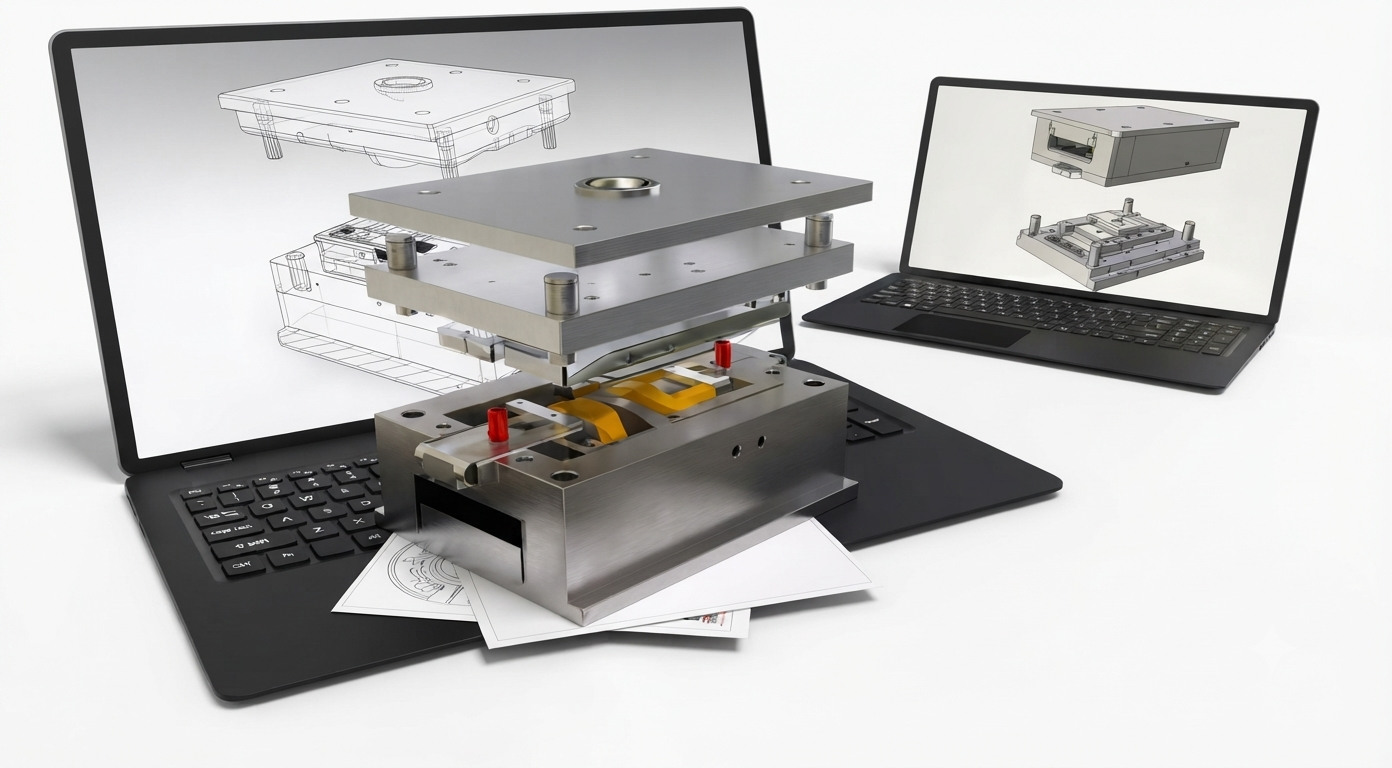
This can be achieved by consistently tracking mould maintenance cycles and investments made toward improving mould health.
Why Track Mould Condition?
In our previous articles of Preventive Mainenance (Part 3.1) and Corrective Maintenance (Part 3.2), we understood the importance of mould maintenance and its impact on mould life. This article continues the same idea but with a different viewpoint on how to track the maintenance and health of the mould.
Requisites of the Tracking Process
Tracking mould maintenance is easier if you have a limited number of moulds. But what if you are a company with hundreds of moulds? Or are a colossal MNC with thousands of moulds at multiple locations spread far and wide across the Globe. In such a case, it is of utmost importance to institute a process which helps you track the maintenance of every asset.
Your process must help you achieve the below objectives:
Creating a Data Repository for Moulds
1.Data Repository: As a company, you should have complete knowhow of all the assets which you own or are running at your facility. It is said that with great data comes greater issues. Hence, data hygiene and transparency are of crucial importance. The data repository will be super helpful to keep track of all your assets and capture important data in one place which can be accessed later or shared with the required members.
Establishing a Preventive Maintenance (PM) Log
2.Preventive Maintenance (PM) Log: Every individual mould will have its own preventive maintenance cycle and so it is of utmost important to have the maintenance schedule in place. This document should include every detail of PM such as whether the PM was performed at the scheduled date, which actions were performed, what was the duration of the down time, and who performed it.
Maintaining an Issue Log for Moulds
3.Issue Log: Issues will always arise in your mould, no matter what you do. Hence, it is advantageous to document all the issues that were observed on the mould during its production run period as well as what was the action plan performed to mitigate the same. This can also act as a database to handle similar issues in the future.
Image 3 Issue Log
Repair Tracker: Managing Refurbishment Cycles
~ Repair Tracker: It is not recommended to refurbish the mould more than 3 times. Maintaining a record of all the refurbishments conducted on the mould and when they were performed along with the scope and cost of the same helps in correctly determining when the mould is not in the required condition and when refurbishing is out of question.
Tracking Mould Health Data
~ Mould Health: Last and perhaps the most important is the dynamic data of moulds such as age, total shots it has run, status of the production run, and current condition on the mould. Such data helps decide the necessary actions.
Scheduled Tracking Cycles: Daily, Weekly, or Monthly?
Once the process is in place, the next step is to make sure that it is performed on a scheduled cycle. The scheduled cycle could be daily, weekly, monthly, or quarterly based on the number of moulds and the availability of resources to conduct the same since it is a time-consuming activity.
The process will also help you set up strategies to maintain your mould and ensure the moulds are in the most optimised condition. All in all, this will improve their life expectancy.
Mould Condition Strategy: Defining Categories
Strategy
Mould condition is the primary factor to consider when designing the strategy. Secondary considerations include category, sub-category, or regions.
Below are few points which should be considered while devising a strategy plan for your mould:
Managing Poor Moulds: Immediate Attention and Rework
Poor Moulds can be a result of multiple issues, which need immediate attention. Careful consideration on the volume forecasts, life of the mould, and previous history of the mould would help the assessor devise an action plan for rework, replacement, or refurbishment.
The mould is inspected for the required scope, after which a final quote with lead time, cost, and scope of work is shared with the stakeholders.
If it is a primary mould or the only mould supporting the business, make sure that enough inventory levels are maintained before the mould is down for the required action plan.
Monitoring Fair Moulds: Preventive Measures and Future Planning
Fair Moulds are those in whom minor issues are observed. With addition to the considerations for Poor moulds, Fair moulds require additional perspective on the warranty, health, and supplier’s confident to run the mould in its current condition.
For fair moulds, we do not need immediate attention. What we need is to monitor the health more carefully so that the mould undergoes the required mitigation action when needed.
Best Practices for Maintaining Good Moulds
Good Moulds are those on which no issues are observed. For these moulds, it is important to ensure the preventive maintenance is done as per the schedule. A good mould is also checked for its utilization based on the capacity and volume. This gives indication if additional mould is required for that structure.
Dealing with Unexpected Mould Failures
However, there will sometimes be totally unexpected events when the mould suddenly breaks down. The breakdown is not forecasted and makes the mould go from Good to Poor. This is a cause of concern but is something no one can do anything about. But if the mould condition changes from Good to Poor without such a black swan event, then there is some gap in your process and optimization of the same is needed.
Optimizing Mould Tracking and Maintenance for Longevity
“Efficient Innovations has been supporting its clients to track thousands of moulds spread across multiple continents. That apart, we create strategies to improve the mould condition. Get in touch with us for a seamless mould tracking and maintenance experience”
Frequently Asked Questions (FAQs)
- Why is it important to track the condition of moulds?
Tracking mould condition helps optimize performance, extend mould life, and reduce unexpected failures. It ensures timely maintenance, improves productivity, and maximizes return on investment by preventing costly downtime and inefficient operations. - What should be included in a mould maintenance log?
A mould maintenance log should include preventive maintenance schedules, actions performed, downtime duration, responsible personnel, and inspection results. It should also document repair history and recurring issues for better decision-making. - How can I create an effective mould health data repository?
An effective repository should centralize all mould-related data, including asset details, maintenance history, usage metrics, and condition status. Ensuring data accuracy, accessibility, and regular updates is key to making it useful. - How do I categorize moulds based on their condition?
Moulds are typically categorized as Good, Fair, or Poor. Good moulds have no issues, Fair moulds show minor concerns, and Poor moulds require immediate attention or repair based on performance and history. - When should a mould be replaced instead of refurbished?
A mould should be replaced when it has exceeded its refurbishment limit, shows consistent performance issues, or when repair costs outweigh its value. Frequent breakdowns are also a strong indicator for replacement. - What are the challenges of tracking mould maintenance for large companies?
Large companies face challenges like managing vast data, ensuring consistency across locations, maintaining data accuracy, and coordinating maintenance schedules for thousands of moulds across multiple facilities. - How often should moulds be checked for preventive maintenance?
The frequency depends on usage and scale but can range from daily to monthly or quarterly. High-usage moulds typically require more frequent checks to ensure optimal performance. - What are the best practices for maintaining good moulds?
Regular preventive maintenance, proper utilization tracking, timely inspections, and maintaining accurate records are essential. Ensuring moulds operate within designed capacity also helps sustain their condition. - How do I manage unexpected breakdowns in moulds?
Maintain backup inventory, respond quickly with repair plans, and analyze root causes. Tracking historical data helps prevent recurrence and improves future maintenance strategies. - What is the impact of poor mould condition on business operations?
Poor mould condition leads to increased downtime, reduced product quality, higher costs, and missed production targets. It can significantly affect profitability and customer satisfaction.