Introduction
The toothbrush manufacturing process involves a highly engineered combination of design, material science, precision tooling, and automated production systems. From product design and prototyping to large-scale mass production techniques, every stage of the toothbrush making process is carefully optimized to ensure safety, durability, and consistent product performance.
Modern toothbrush manufacturers rely on advanced plastic molding process technologies, mold design and tooling expertise, and production line automation to maintain manufacturing efficiency while meeting strict quality standards. Even small variations in tooling precision or material consistency can directly impact product comfort, bristle stability, and long-term durability.
An experienced injection mold consultant plays a critical role in this lifecycle by helping manufacturers improve mold accuracy, optimize tooling performance, and strengthen manufacturing quality control systems throughout the industrial manufacturing process.
What Makes a Toothbrush High Quality?
A high-quality toothbrush is designed to deliver effective cleaning while remaining safe, durable, and comfortable for daily use. Beyond appearance, product quality depends heavily on manufacturing precision, ergonomic design, and consistent material performance.
Important quality factors include:
- Soft yet durable bristles that clean effectively without harming gums
- Ergonomic handle design for better grip and user comfort
- Strong bristle retention to improve long-term durability
- Smooth surface finishing for user safety and hygiene
- Consistent manufacturing quality control across large production volumes
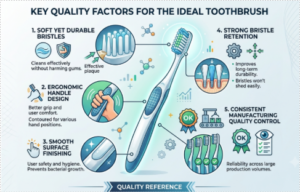
The toothbrush manufacturing process must maintain strict precision standards throughout molding, trimming, tufting, and finishing operations to ensure reliable product quality and consumer safety.
Quick Answer: What Threat Exposure Management Product Leaders Should Know About Exposure Assessment Planning (EAP) and Attack Exposure View (AEV)
Modern manufacturing systems are becoming increasingly data-driven and interconnected. Product leaders who focus on operational visibility, proactive risk assessment, and early-stage process optimization are better positioned to reduce production vulnerabilities, improve manufacturing quality control, and maintain scalable production efficiency across evolving industrial environments.
Understanding the Toothbrush Manufacturing Workflow
The toothbrush manufacturing process follows a highly structured workflow designed to ensure product consistency, manufacturing efficiency, and large-scale production reliability. While the final product may appear simple, the toothbrush making process involves multiple precision-driven stages that work together to create safe, durable, and ergonomically designed toothbrushes.
A typical toothbrush production line setup includes:
- Product design and prototyping to finalize toothbrush shape, grip, and functionality
- Mold design and tooling development for handle production and component accuracy
- Plastic molding process to manufacture toothbrush handles at scale
- Bristle tufting and trimming for cleaning performance and comfort
- Manufacturing quality control checks to ensure safety and consistency
- Packaging and final inspection before distribution
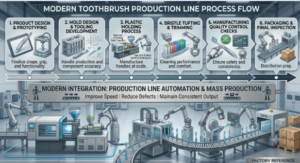
Modern factories also integrate production line automation and mass production techniques to improve speed, reduce defects, and maintain consistent output across high-volume industrial manufacturing process environments.
Raw Materials Used in Toothbrush Production
The quality and durability of a toothbrush depend heavily on the materials used during the toothbrush manufacturing process. Manufacturers carefully select materials based on flexibility, strength, hygiene, safety, and long-term product performance.
Common raw materials used in toothbrush production include:
- Polypropylene (PP): Widely used for toothbrush handles because of its strength, lightweight properties, and chemical resistance
- Thermoplastic Elastomers (TPE): Added to handles for soft grip and improved user comfort
- Nylon Bristles: Commonly used for bristle production due to flexibility, durability, and moisture resistance
- Color Masterbatches: Used to create customized product colors and branding designs
- Antibacterial Additives: Sometimes included to improve hygiene performance
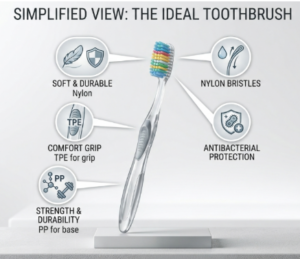
Material selection plays an important role in manufacturing quality control, product durability, and overall production efficiency. During the plastic molding process, manufacturers must also ensure proper material optimization to reduce waste and maintain consistent product quality across large-scale toothbrush production line setup operations.
Step-by-Step Toothbrush Manufacturing Process
The toothbrush manufacturing process involves several precision-controlled stages designed to ensure product safety, durability, comfort, and manufacturing efficiency. Each step in the toothbrush making process contributes to the final product’s quality and performance while supporting large-scale industrial manufacturing process requirements.
Designing the Toothbrush Mold
The process begins with product design and prototyping, where manufacturers create the toothbrush shape, handle structure, grip patterns, and ergonomic features using advanced CAD software.
During this stage, engineers focus on:
- User comfort and handle ergonomics
- Bristle placement and head dimensions
- Material optimization for strength and flexibility
- Manufacturing feasibility and mold performance
Mold engineering specialists often optimize cooling channels, gate locations, and cavity balance to improve part quality and reduce manufacturing costs.
Injection Molding of Toothbrush Handles
Once the mold is finalized, the plastic molding process begins. Thermoplastic materials such as polypropylene are heated into molten form and injected into precision molds under controlled pressure.
The molding process includes:
- Plastic melting and injection ( Bi-injection with TPE- if needed)
- Mold cavity filling
- Cooling and solidification
- Handle ejection and inspection
Two-shot molding is often used to combine rigid polypropylene with soft TPE grip materials in a single production cycle.
This stage is critical for maintaining dimensional accuracy, structural durability, and consistent product quality across high-volume toothbrush manufacturing process operations.
Bristle Manufacturing and Selection
Toothbrush bristles are typically made from nylon because of its flexibility, durability, and moisture resistance. Manufacturers carefully select bristle thickness, softness, and cutting style depending on the toothbrush category and intended user experience.
Common bristle types include:
- Soft bristles for sensitive gums
- Medium bristles for balanced cleaning
- Specialized tapered bristles for deep cleaning
Precision cutting techniques ensure uniform bristle length and improved cleaning consistency.
Tufting Process: Fixing Bristles into the Head
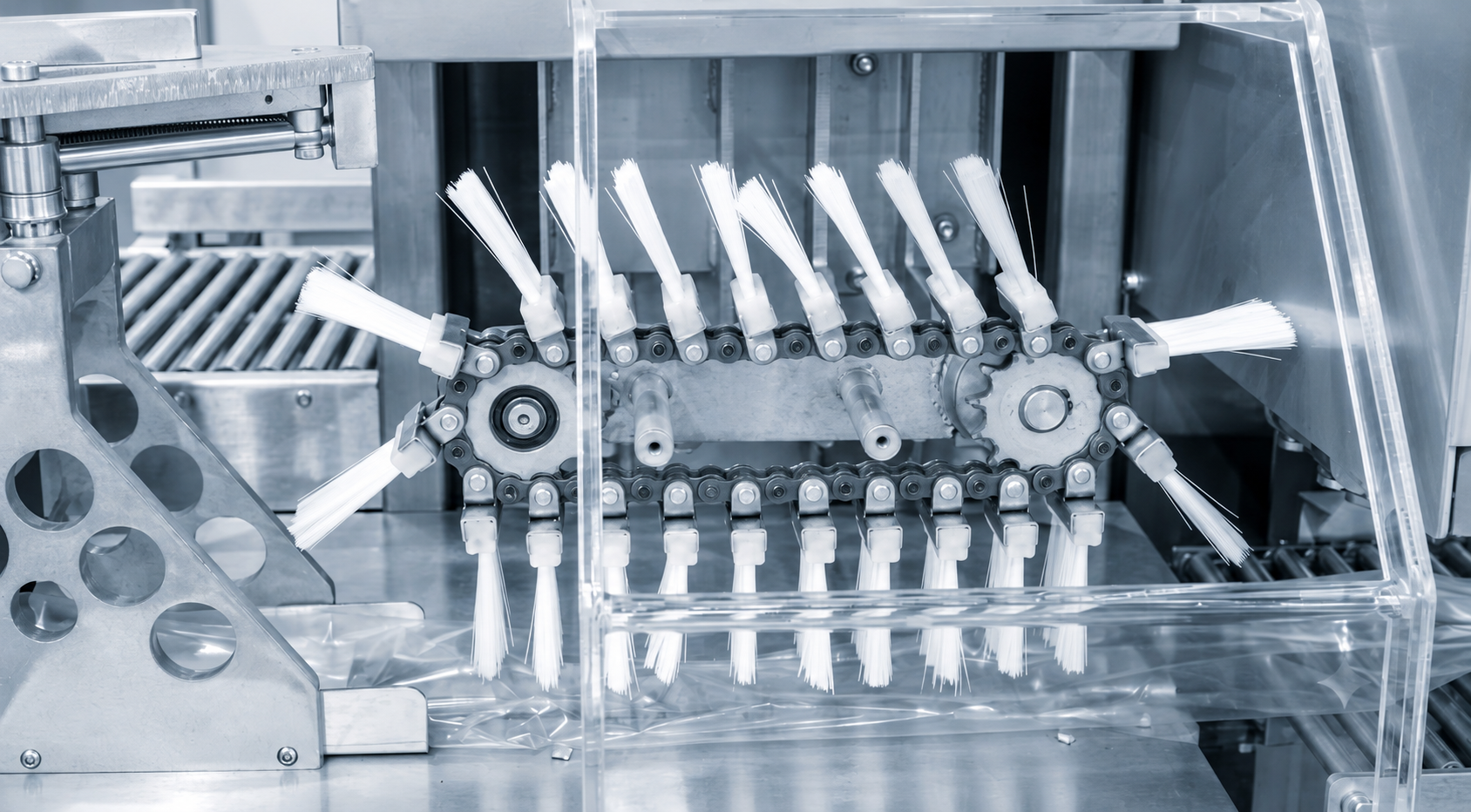
During tufting, automated tufting machines insert bundles of bristles into pre-drilled holes in the toothbrush head. This stage requires high accuracy to maintain consistent bristle alignment and secure fixation.
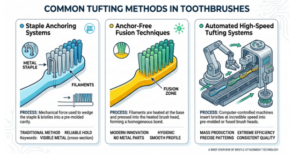
Common tufting methods include:
- Staple anchoring systems
- Anchor-free fusion techniques
- Automated high-speed tufting systems
Production line automation helps improve manufacturing efficiency and reduce defects during large-scale toothbrush making process operations.
Trimming and End Rounding of Bristles
After tufting, the bristles are trimmed to the required shape and polished using end-rounding machines. This process removes sharp edges and creates smooth bristle tips for safer brushing.
Benefits of end rounding include:
- Improved gum protection
- Better brushing comfort
- Reduced risk of oral irritation
- Enhanced product safety and quality control
Cleaning and Sterilization
Hygiene plays a critical role in the toothbrush manufacturing process. Before packaging, toothbrushes undergo cleaning and sterilization procedures to remove dust, contaminants, and production residues.
Manufacturers follow strict manufacturing quality control standards to ensure:
- Product cleanliness and hygiene compliance
- Safe handling during production
- Consistent sterilization procedures
- Regulatory safety compliance
Branding, Printing, and Finishing
At the finishing stage, manufacturers add branding, logos, product information, and decorative elements to the toothbrush handles and packaging.
Common finishing techniques include:
- Pad printing and laser printing
- Custom color finishing
- Rubber grip integration
- Hot foil stamping
- Decorative surface treatments
These processes improve product aesthetics while supporting product differentiation and brand recognition.
Packaging and Distribution
The final stage involves packaging and distribution preparation. Toothbrushes are packed using automated systems designed to maintain hygiene, product protection, and retail presentation standards.
Packaging options may include:
- Individual blister packaging
- Eco-friendly paper-based packaging
- Multi-pack retail packaging
- Sustainable recyclable packaging solutions
Many manufacturers are now adopting sustainability-focused packaging trends to reduce environmental impact while maintaining product safety during storage and transportation.
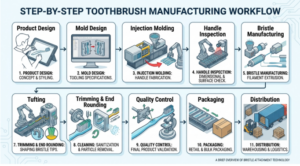
Quality Control in Toothbrush Manufacturing
Manufacturing quality control is one of the most important stages in the toothbrush manufacturing process. Since toothbrushes are daily-use hygiene products, manufacturers must maintain strict testing standards to ensure safety, durability, comfort, and consistent product performance across large-scale production runs.
Quality control checks are performed throughout the toothbrush making process, from raw material inspection to final packaging approval. Automated inspection systems and production line automation technologies help manufacturers maintain precision and reduce defects during high-volume manufacturing.
Key quality control tests include:
- Bristle strength testing to ensure bristles remain securely fixed during use
- End-rounding inspection for smooth bristle tips that protect gums and oral tissues
- Handle durability testing to check structural strength and resistance to breakage
- Hygiene and sterilization checks to maintain product cleanliness and safety compliance
- Dimensional accuracy inspections for consistent handle shape and ergonomic performance
- Material quality verification during the plastic molding process
Manufacturers also use advanced manufacturing quality control systems to monitor mold design and tooling performance, production consistency, and defect rates across the toothbrush production line setup. These checks help maintain product reliability, improve manufacturing efficiency, and support safe mass production techniques in modern industrial manufacturing process environments.
Conclusion
The toothbrush manufacturing process is a highly precise and technology-driven operation that combines product design and prototyping, advanced plastic molding process techniques, production line automation, and strict manufacturing quality control standards. From mold design and tooling to bristle tufting, sterilization, and packaging, every stage plays a critical role in creating safe, durable, and high-performance toothbrushes for everyday use.
As competition and consumer expectations continue to grow, manufacturers must focus on manufacturing efficiency, scalable production, and consistent product quality throughout the toothbrush making process. Precision engineering, automation, and early-stage design optimization are now essential for maintaining reliable mass production techniques and minimizing production defects.
Efficient Innovations supports manufacturers through expert tooling guidance, production optimization strategies, and advanced manufacturing expertise that help businesses improve product quality, streamline toothbrush production line setup operations, and achieve long-term manufacturing efficiency.
Frequently Asked Questions
How are toothbrushes manufactured step by step?
The toothbrush manufacturing process includes mold design and tooling, plastic handle injection molding, bristle production, tufting, trimming, sterilization, branding, packaging, and final manufacturing quality control inspections.
What materials are used to make toothbrushes?
Toothbrushes are commonly made using polypropylene for handles, thermoplastic elastomers for grip comfort, and nylon for bristles due to durability, flexibility, and hygiene performance.
What is injection molding in toothbrush manufacturing?
Injection molding is a plastic molding process where molten plastic is injected into precision molds to form toothbrush handles with consistent shape, strength, and ergonomic design.
Why are bristles rounded in toothbrush production?
Bristles are end-rounded to create smooth edges that protect gums, improve brushing comfort, and reduce the risk of oral irritation during daily use.
How are toothbrush bristles attached to the handle? How are toothbrush bristles attached to the handle?
Toothbrush bristles are typically attached using automated tufting machines that insert nylon bristle bundles into the head using staple or anchor-free fixation methods. A key detail in this process is that the holes are not drilled; while manufacturing the handle, the holes are created during the molding process.