
Three Ways FMCG Companies Can Start Becoming Sustainable
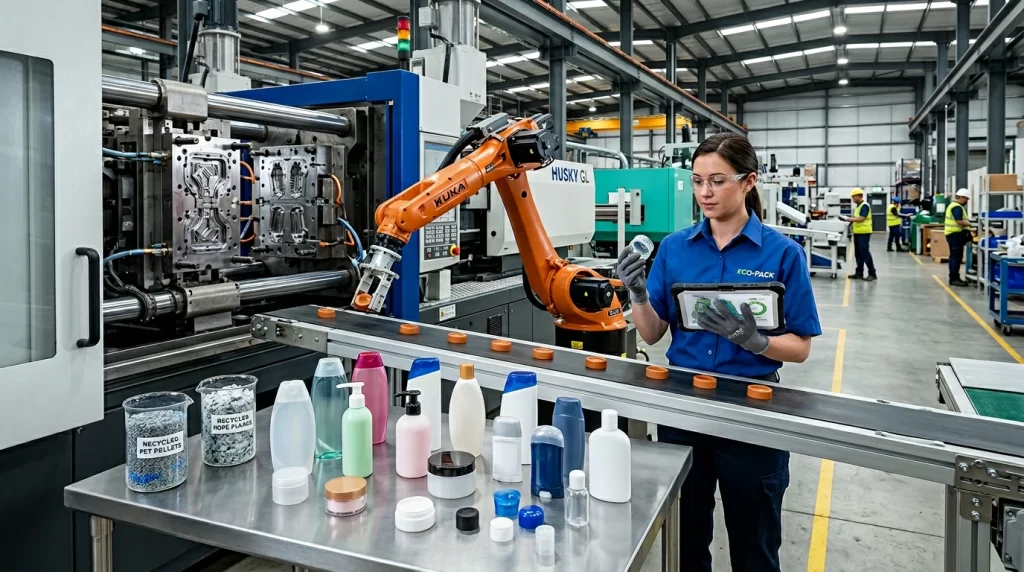
Key Takeaways Sustainability in FMCG means minimizing environmental impact through eco-friendly, recyclable, and reusable packaging while maintaining profitability and remaining competitive in an environmentally conscious market. Around 90% of FMCG packaging relies on virgin plastics derived from crude oil, making the shift toward recycled and reusable materials a critical step in reducing carbon emissions and […]
Recycling Aerosol & Beverage Cans | Process, Benefits & Impact

Key Takeaways Cooling and hold time account for 50–75% of total cycle time, making cooling optimization the highest-impact lever in injection moulding productivity. Conventional straight-drilled channels often fail to cool complex geometries evenly, leading to hotspots, higher cycle times, and poor part quality. Conformal cooling channels follow the mould contours, positioning cooling closer to the […]
Part 3 Interesting Insights About Let Down Ratio in Post-Consumer Resin
Key Takeaways Let Down Ratio (LDR) is the percentage of master-batch added to base resin to achieve the desired colour intensity, uniformity, and appearance in moulded plastic parts. PCR has a natural grey, non-uniform base colour that makes bright shades like white, yellow, or blue appear pale and unappealing, making darker colours like black, dark […]
Optimal Clamping Force in Injection Moulding
Key Takeaways Cooling and hold time account for 50–75% of total cycle time, making cooling optimization the highest-impact lever in injection moulding productivity. Conventional straight-drilled channels often fail to cool complex geometries evenly, leading to hotspots, higher cycle times, and poor part quality. Conformal cooling channels follow the mould contours, positioning cooling closer to the […]
What is Root Cause Analysis? A Guide for Manufacturing and Process Improvement
Key Takeaways RCA is about finding the correct cause of a problem, without it, corrective actions are directionless and defects are likely to recur. Correlation is not causation, the most common mistake in RCA is casually linking two correlated factors without validating a true cause-and-effect relationship. Key data is often missing or incomplete, making it […]