
Sustainability Without Stability?
A Technical RCA of PCR-Black Specks
Why a process window that was fully robust for virgin resin
became unstable the moment 50% recycled content was introduced
1. Background and Strategic Context
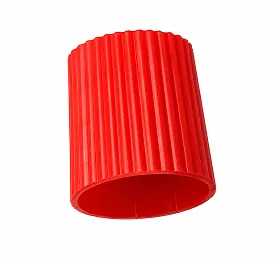
As part of a broader sustainability initiative, a transition was initiated from 100% virgin polypropylene to a 50% Post-Consumer Recycled (PCR) polypropylene blend for a high-volume closure application. The objective was to incorporate recycled content without compromising cosmetic quality, productivity, or process stability.
To ensure a controlled evaluation, all boundary conditions were intentionally locked. The moulds, machines, hot runner systems, operators, part design, and acceptance criteria remained unchanged. The only deliberate variable introduced during trials was the material composition.
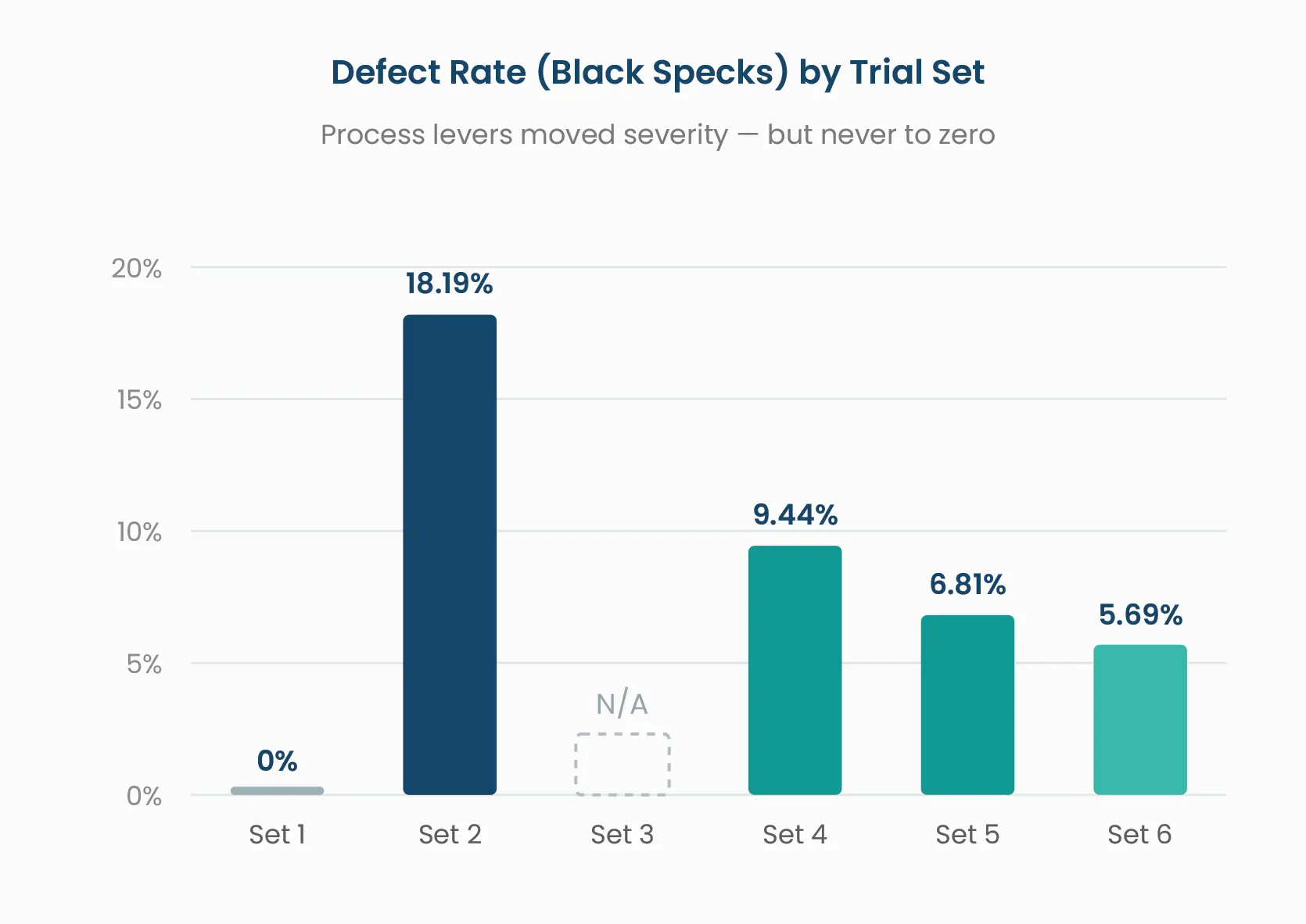
Under 100% virgin polypropylene, production was stable and free of cosmetic defects. However, once the 50% PCR blend was introduced, black speck defects appeared immediately, with rejection rates reaching 18.19% during initial trials. This sharp contrast confirmed that the issue was not random but intrinsically linked to the behaviour of PCR under the existing processing conditions.
The investigation, therefore, shifted from symptom control to root cause identification.
Problem beyond the problem
Global sustainability targets have fast-tracked the shift toward
post-consumer recycled (PCR) polymers in packaging. What’s often overlooked is that PCR resins typically exhibit broader molecular weight distribution, diminished oxidative stability from previous processing cycles, and higher contamination variability than virgin materials — all of which directly impact melt behavior, stability, and defect risk
Impact of the issue
1. Cosmetic rejection beyond acceptable limits
2. Line inefficiencies and extended trial cycles
3. Risk to PCR adoption roadmap despite strong intent
2. Problem Statement
During production trials, black speck defects were observed exclusively after the introduction of PCR resin. Under identical machine settings and process parameters, virgin resin demonstrated stable performance with zero occurrence of similar defects.
Importantly, the previously validated PCR lot used during material approval trials did not indicate any such risk.
Defect Profile
Black specks ranging from 0.5–1.5 mm
Rejection rate peaking at 18.19%
22 cavities blocked during initial PCR trials
Visible shade variation against approved LSD reference standard
50%
PCR content in the blend
18.19%
Peak rejection rate
22
Cavities blocked in trials
0.5–1.5 mm
Black speck size range
The central technical challenge extended beyond defect elimination. The key question was — why did a process window that was fully robust for virgin resin become unstable upon PCR integration?
Identifying the true driver was critical to prevent superficial corrective actions and avoid premature dismissal of PCR feasibility.
A structured root cause investigation was required to determine whether the
instability originated from:
Material variability
Lot-specific contamination
Process sensitivity
Equipment or shear-related degradation
Defect Profile
- Black specks ranging from 0.5–1.5 mm.
- Rejection rate peaking at 18.19%.
- 22 cavities blocked during initial PCR trials.
- Visible shade variation against the approved LSD reference standard.
The central technical challenge extended beyond defect elimination. The key question was: Why did a process window that was fully robust for virgin resin become unstable upon PCR integration?
A structured root cause investigation was required to determine whether the instability originated from:
- Material variability.
- Lot-specific contamination.
- Process sensitivity.
- Equipment or shear-related degradation.
Identifying the true driver was critical to prevent superficial corrective actions and avoid premature dismissal of PCR feasibility.
Impact of the Issue
- Cosmetic rejection beyond acceptable limits.
- Line inefficiencies and extended trial cycles.
- Risk to the PCR adoption roadmap despite strong intent.
2.1 Comparative Behaviour: Virgin vs PCR
Parallel trials were conducted to establish baseline system behaviour.
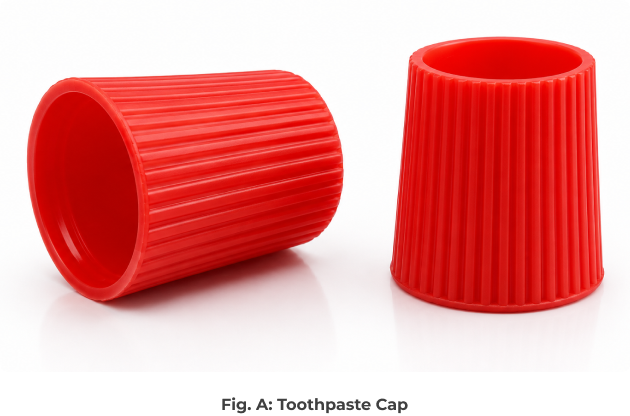
- Component: 19 mm and 22 mm closures (caps).
- Mould cavitation: High cavitation, with 96 and 144 cavities, using hot runner systems.
- Material:
- 100% Virgin Polypropylene (PP).
- 50% Virgin Polypropylene (PP) + 50% Recycled PP (PCR).
Under identical processing conditions, the following contrasts were observed:
- Virgin material exhibited a wide and forgiving process window.
- PCR blends demonstrated narrow tolerance to temperature and shear changes.
- Residence time sensitivity was negligible with virgin resin but pronounced with PCR.
- Cosmetic stability deteriorated progressively with increased PCR exposure time.
This comparative analysis confirmed that the system itself was not randomly unstable. The instability was material-behaviour dependent.

3. Methodology and Controlled RCA Framework
A structured, multi-layered Root Cause Analysis was conducted rather than relying on parameter adjustments alone. The evaluation covered material characteristics, plastination behaviour, thermal exposure, residence time sensitivity, equipment design, and environmental conditions.
Virgin and PCR trials were conducted in parallel to establish comparative behaviour under identical machine settings. This baseline comparison confirmed that virgin resin exhibited a wide and forgiving process window, whereas the PCR blend demonstrated narrow tolerance to thermal and shear exposure.
This comparative approach eliminated speculation and focused the analysis on system behaviour rather than isolated variables.
A structured DOE evaluated:
- Barrel temperature profiles.
- Screw RPM adjustments.
- Back pressure.
- Material substitutions, comparing virgin material with the blend.
3.1 Phase I: Design of Experiments — Process Window Exploration
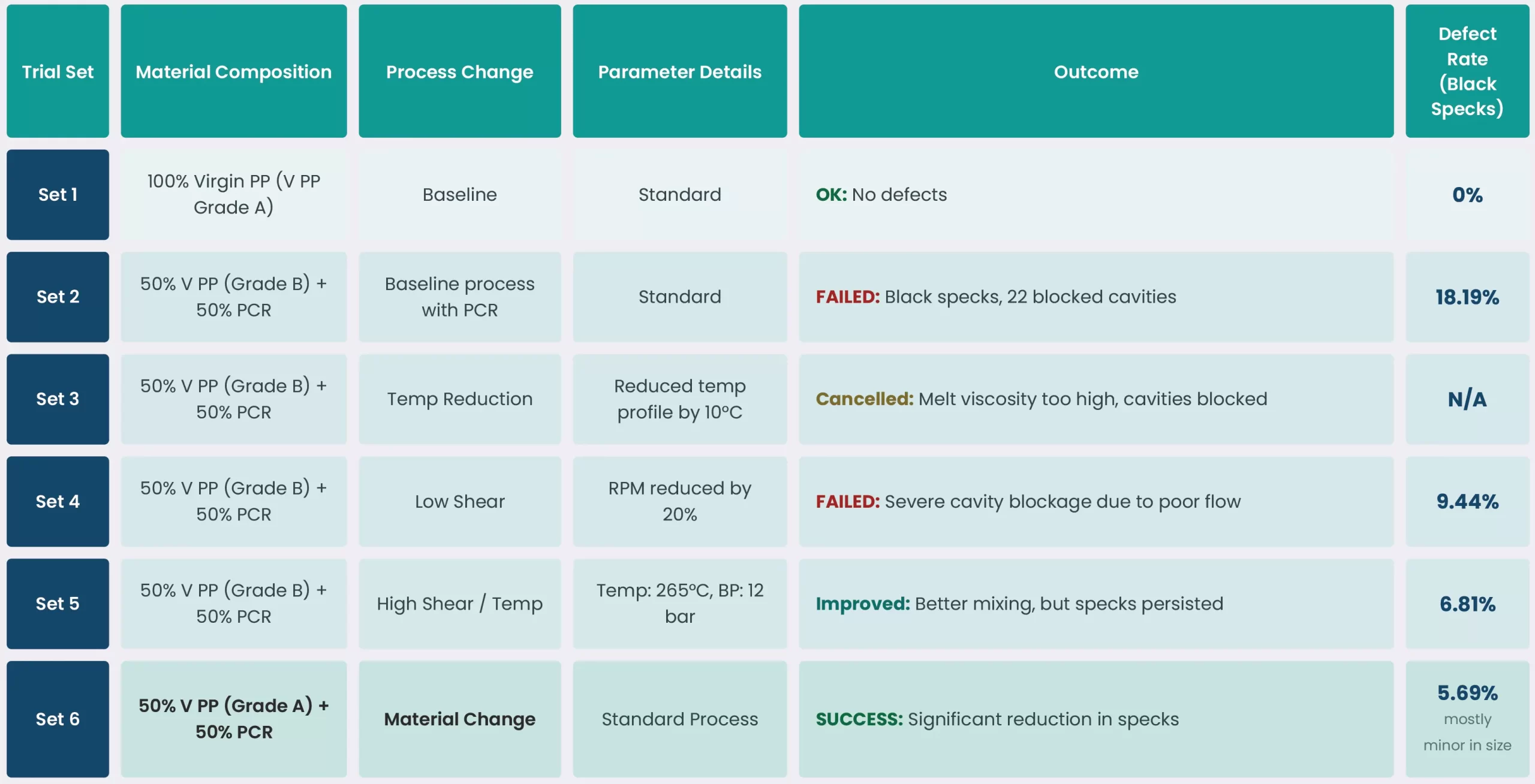
Before changing materials, process variables were exhausted to determine whether the 3.4/10.5 blend could be stabilised. The following DOE table summarises the critical trials conducted at the supplier’s facility.
Table 1: Process Optimisation Trials
Key Process Insights
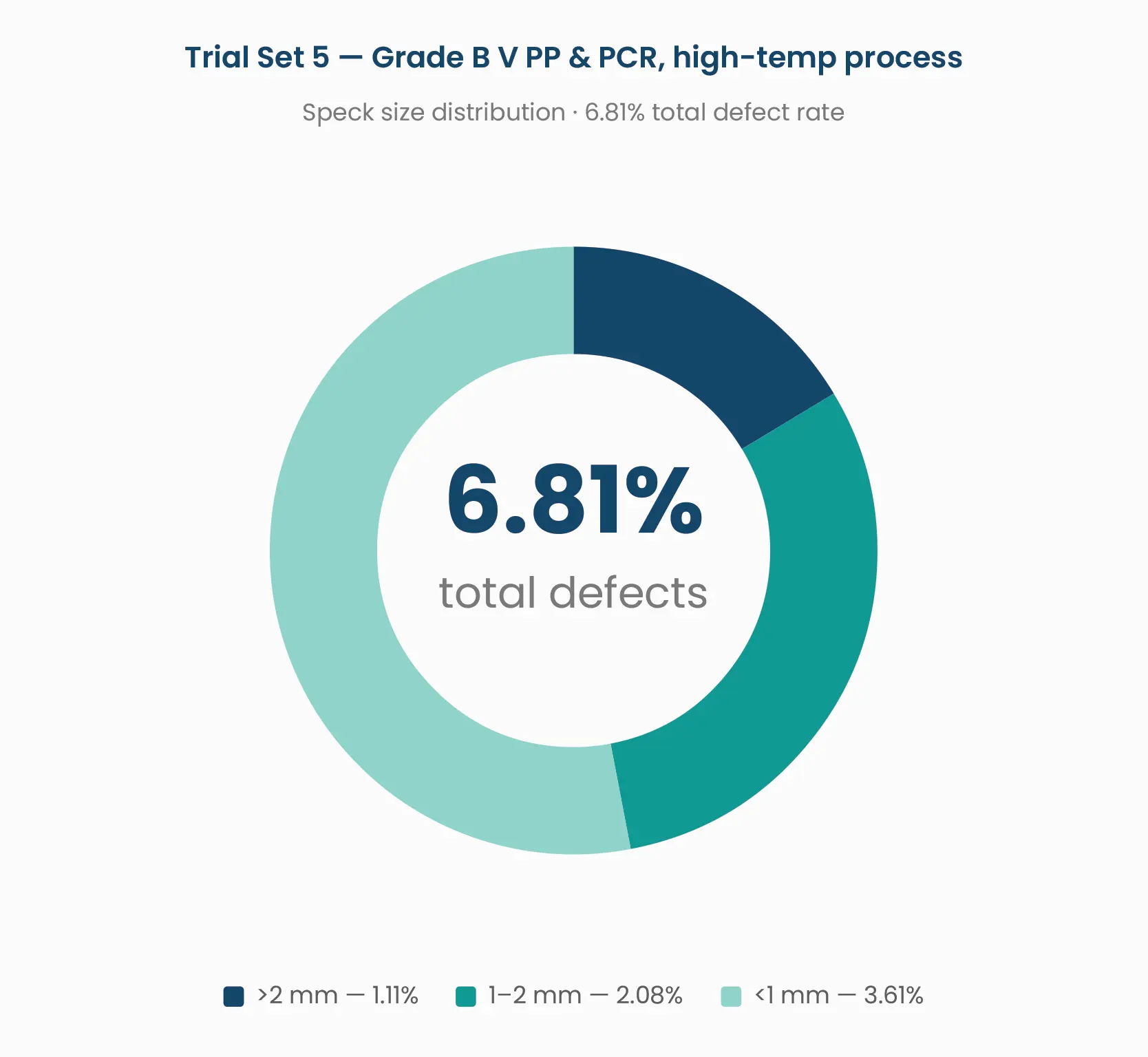
● Temperature ceiling: Temperatures were pushed beyond 250°C to lower the viscosity of the virgin resin and determine whether reduced viscosity would improve mixing. Although this improved mixing and reduced the defect rate from 18% to 6.8%, temperatures above 250°C should not be used for PP because of the risk of long-term polymer-chain degradation.
● Back pressure: Increasing back pressure aided mixing but increased shear stress, creating a risk of further PCR degradation.
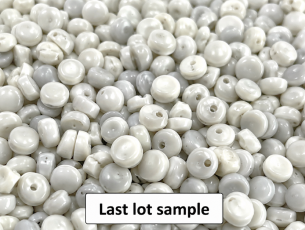
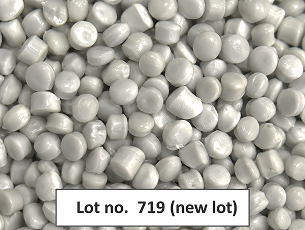
● The previous lot of the same rPP did not show the issue. Black specks began appearing on components when the new lot was introduced into production.
3.2 Primary Rheological Interaction and Melt Incompatibility
The blend contained two materials with a viscosity differential of approximately seven MFI units.
In injection moulding, particularly in high-cavitation systems:
- The lower-MFI material, at 3.4 MFI, requires greater shear energy to melt.
- The higher-MFI PCR, at 10.5 MFI, melts faster and flows earlier.
- The screw must continue shearing to homogenise the higher-viscosity fraction.
This creates three risks:
- Uneven melt consistency.
- Localised shear overheating.
- Extended effective residence time for certain fractions in the barrel.
The study indicated that poor melt consistency likely increased localised stagnation and effective residence time in the barrel. Under these conditions, thermally sensitive fractions, especially within PCR, degraded and formed larger carbonised particles.
This explains an important observation:
- The PCR blend produced larger black specks, not just a higher frequency of specks.
The degradation mechanism was not random contamination; it was melting-behaviour driven. MFI was used as a practical rheological indicator. Full shear-viscosity curves were not available during plant trials. However, the directional impact of viscosity mismatch was strongly supported by the trial results.
3.3 DOE Findings: Process Adjustments Could Not Compensate
Process optimisation trials included temperature adjustments, screw RPM reduction, and back-pressure increases to modify melt viscosity.
● Higher temperatures temporarily improved mixing but increased degradation risk.
● Lower RPM reduced shear but worsened homogenisation.
● Reducing the temperature caused flow instability.
The consistent pattern was that process changes could influence severity but could not eliminate speck formation while the 3.4/10.5 MFI mismatch remained.
This indicated that the root cause was structural within the blend, not purely parametric.
3.4 Validation Through Grade Correction
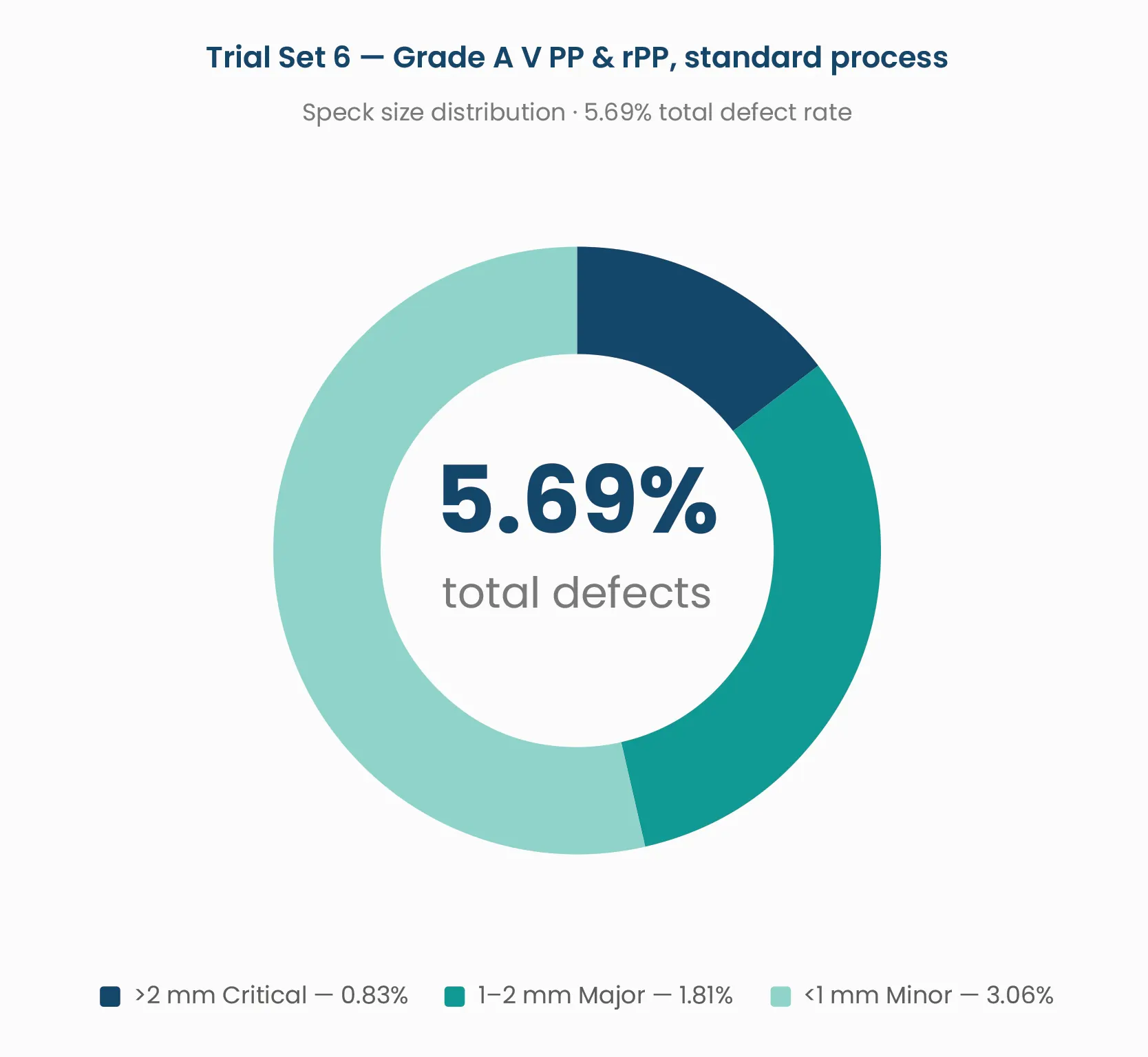
To test the incompatibility hypothesis, the virgin grade in the blend was switched from V PP Grade B, at 3.4 MFI, to V PP Grade A, at approximately 11 MFI, aligning closely with the PCR viscosity. No major process-window change was introduced.
The outcome was decisive:
- Black speck rate reduced significantly.
- Larger specks reduced in frequency.
- Melt stability improved.
- Cavity blockage reduced.
This confirmed that viscosity compatibility improved melt consistency and reduced localised degradation.
The PCR itself was not solely responsible. The instability was amplified by grade mismatch.
4. The Root Cause Analysis
The investigation confirmed that aligning the Melt Flow Index (MFI) between blend components significantly improved melt stability and overall process robustness. However, while rheological alignment reduced degradation severity, it did not eliminate contamination inherently present within PCR feedstock.
This distinction was critical in separating controllable process variables from material-origin variability.
The study demonstrated that MFI alignment is a necessary, but not sufficient, condition for stable high-PCR integration in high-cavitation moulding systems. When operating at 50% PCR content, defect escalation could not be attributed to a single variable or isolated failure mechanism.
Instead, black speck formation resulted from a systemic interaction of multiple factors operating simultaneously:
- Rheological mismatch between virgin and PCR fractions, leading to uneven shear exposure and poor melt homogenisation.
- Elevated thermal sensitivity of recycled polymer fractions.
- Limited mixing efficiency of standard general-purpose screws in high-cavitation environments.
- Increased degradation risk during extended residence time and machine restarts.
- Inherent lot-to-lot variability within PCR feedstock.
The RCA reframed the issue from a perceived “material quality problem” to a system-level compatibility and exposure challenge. This shift allowed corrective actions to focus on structural stability rather than symptomatic adjustments.
PCR integration must account for inherent lot-to-lot variability, particularly in melt-flow characteristics and residual contamination levels, which can influence process stability.
5. Conclusion: Implications for High-PCR Processing
The findings reinforce that successful PCR integration requires deliberate blend architecture, not simple material substitution. Rheological compatibility between virgin and PCR components plays a foundational role in maintaining melt consistency and minimising localised degradation.
However, rheology alignment alone does not neutralise feedstock variability or eliminate sensitivity to residence time and mixing limitations. High-PCR systems demand tighter exposure control, disciplined restart protocols, and realistic acceptance of contamination thresholds linked to filtration capability.
Unlike virgin resin, PCR carries a melt history before it enters the barrel. Processing success depends on this history and on understanding its sensitivity to melt consistency, residence time, and shear history.
Following implementation of grade alignment and process refinements, the operation demonstrated:
- A significant reduction in black speck occurrence.
- Improved process repeatability under PCR conditions.
- Clearly defined PCR-specific control limits.
- Restored confidence in the technical feasibility of recycled content for the application.
Most importantly, the outcome provided technical clarity rather than a temporary correction. The system’s robustness boundaries were quantified, enabling informed decision-making regarding sustainable content targets.

Key Learnings for OEMs and Sustainability Programs
This case highlights several critical considerations for organisations pursuing high-PCR integration in precision, high-cavitation applications:
- PCR performance must be evaluated as a system interaction, not as a standalone material characteristic.
- Viscosity compatibility between blend components should be treated as a primary design parameter.
- Standard screw designs may become limiting factors as recycled content increases.
- Residence-time discipline and restart protocols carry greater risk weight in PCR environments.
- Contamination control must be aligned with realistic feedstock filtration capability rather than aesthetic expectations derived from virgin performance.
Sustainability targets are achievable, but only when engineering fundamentals are respected. PCR does not inherently reduce process stability; it reduces the tolerance margin for uncontrolled variables.
Sustainable integration succeeds when material behaviour is understood before targets are enforced.
Clients We Work With
We collaborate with forward-thinking clients across industries.
Together, we turn ideas into measurable results.