Key Takeaways
- Managing mould projects globally is not just coordination, it is a complex system of governance, risk control, and execution that most teams underestimate.
- From digital tools to real-time visibility, discover how modern frameworks are transforming how global mould programs are planned, tracked, and delivered.
- The real edge lies in structured execution. Learn how the right approach can turn global complexity into control, consistency, and predictable project success
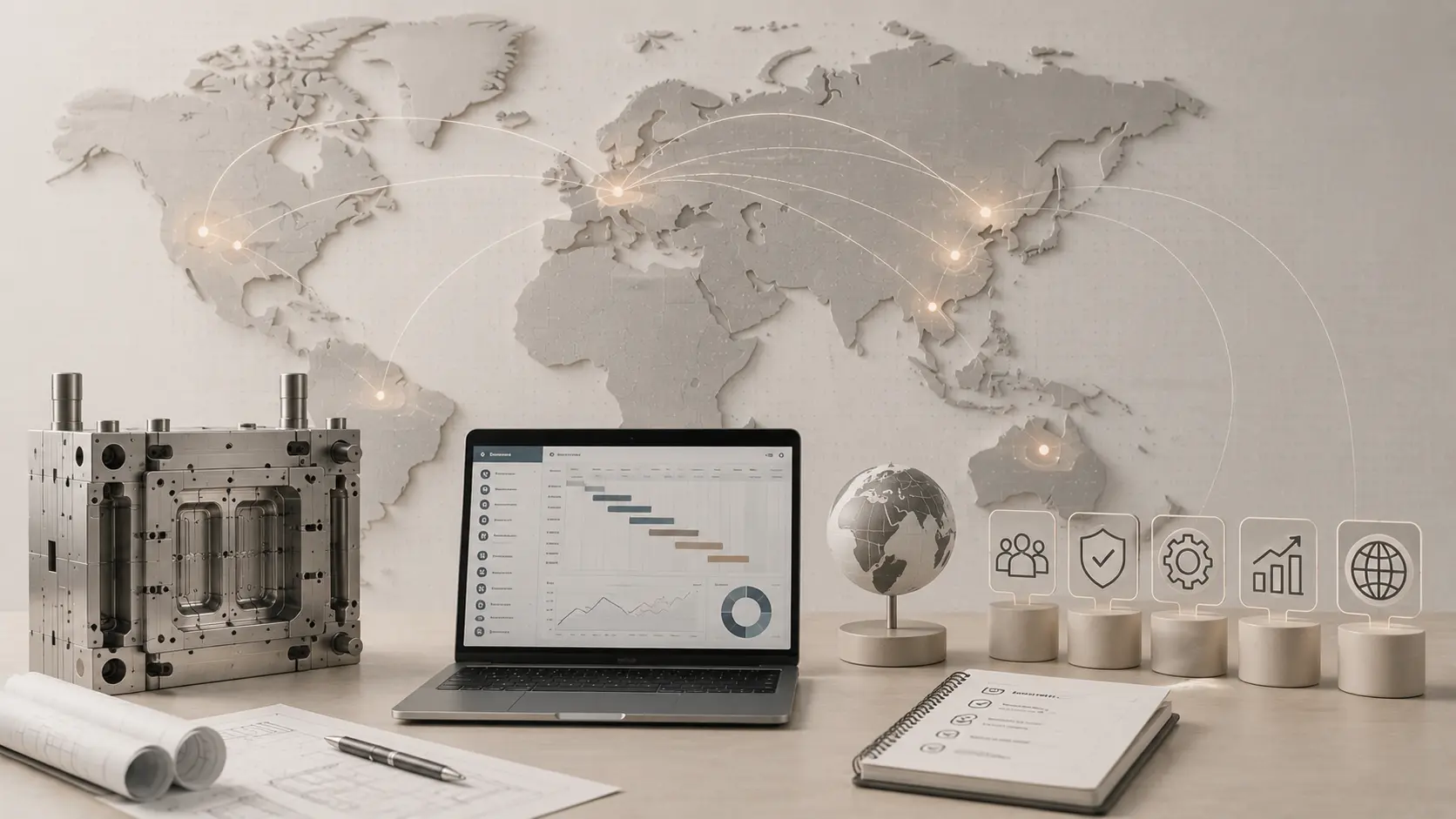
Global mould projects involve coordinating design, tooling, suppliers, and manufacturing teams across multiple regions. Differences in regulations, supply chains, and communication structures make these projects far more complex than local tooling programs.
Applying best practices for managing global mould projects ensures better control over timelines, costs, and quality. With structured project governance and compliance and technology-enabled coordination, manufacturers can execute mould programs reliably across international operations.
Through its integrated engineering and project oversight capabilities, Efficient Innovations helps manufacturers manage complex tooling programs with greater visibility, control, and reliability across international manufacturing networks.
Why Global Mould Project Management Demands a Different Approach
Global mould development initiatives operate under conditions that differ fundamentally from traditional local manufacturing projects. Managing tooling programs across borders introduces additional layers of complexity that require specialised governance structures and technology-driven coordination.
Some of the key challenges include:
- Time Zone Coordination
Engineering teams, suppliers, and manufacturing plants may operate across multiple continents. Without structured communication workflows, project decisions can stall or become fragmented. - Currency Fluctuations and Financial Risk
Global tooling projects often involve suppliers in multiple markets. Currency volatility can impact project budgets and cost forecasting. - Regulatory Compliance Variations
Different regions impose unique regulatory requirements for manufacturing and product safety. Ensuring compliance across jurisdictions requires careful planning and documentation. - Cultural Differences in Communication
Global teams bring diverse working styles and communication practices. Misalignment can lead to delays in decision-making or misunderstandings during technical collaboration. - Supply Chain Disruptions
Cross-border supply chains are more vulnerable to logistics delays, geopolitical issues, and supplier capacity constraints.
Because of these challenges, global project management for mould development must go beyond traditional coordination methods. Successful programs rely on:
- Structured project governance and compliance frameworks
- Technology platforms enabling real-time project monitoring
- Strong risk management in global operations
- Integration of digital transformation in manufacturing systems
By combining engineering expertise with technology-enabled oversight, companies can manage mould development complexity while maintaining visibility and control across geographically distributed operations.
The Global Mould Development Landscape: Key Challenges & Opportunities
The global mould manufacturing ecosystem is undergoing rapid transformation. As supply chains become more interconnected and manufacturing technologies evolve, companies managing cross-border tooling programs must adapt to shifting market realities. Understanding these trends is essential when applying best practices for managing global mould projects.
Several major forces are shaping today’s mould manufacturing trends:
- Industry 4.0 Adoption
Digital tools such as IoT-enabled machines, predictive maintenance systems, and integrated engineering platforms are driving digital transformation in manufacturing. These technologies enable real-time project monitoring, improving visibility across global mould development programs. - Nearshoring vs. Offshoring Decisions
Many manufacturers are reassessing global sourcing strategies. While offshoring historically reduced costs, supply chain disruptions and geopolitical risks are encouraging nearshoring to improve resilience and lead times within the global supply chain. - Increasing Regulatory and Environmental Compliance Requirements
International manufacturing projects must now navigate stricter regulatory compliance frameworks, including ISO standards, environmental regulations, and sustainability mandates. Compliance requirements often differ across regions, making structured governance essential. - Specialized Talent Shortages in Mould Engineering
Highly skilled mould designers, tooling engineers, and process specialists remain in short supply worldwide. This talent gap can slow project timelines and increase development costs.
These factors contribute to significant execution risks. Industry studies frequently show that large manufacturing projects experience cost overruns of 20–30% and schedule delays exceeding 15%, often due to coordination challenges, supply chain disruptions, and design revisions.
However, these challenges also present opportunities. Companies that integrate advanced project governance, digital collaboration tools, and structured risk management in global operations can significantly improve project outcomes.
By embracing technology-driven oversight and proactive coordination strategies, manufacturers can navigate the evolving global mould development landscape while maintaining competitive advantage in complex international tooling programs.
Core Framework: Five Pillars of Global Mould Project Excellence
Managing international tooling programs requires a structured project management framework that ensures alignment, visibility, and control across locations. Organizations following best practices for managing global mould projects typically rely on five core pillars:
Pillar 1: Strategic Planning & Global Governance
Successful global tooling programs begin with structured project planning supported by clear governance. For multinational mould projects, planning must account for regulatory differences, cross-border coordination, and multi-site execution.
Key elements include:
- Project Charter Development
Establish project objectives, scope, success criteria, and governance structure from the outset. - Stakeholder Alignment Across Regions
Coordinate engineering teams, suppliers, and manufacturing sites through structured stakeholder management processes. - Scope Definition with Regulatory Considerations
Ensure early alignment with regional compliance requirements and manufacturing standards. - Global Timeline Planning
Build schedules that account for time zones, supplier dependencies, and international logistics constraints.
Strong governance ensures consistent decision-making and accountability across global mould development programs.
Pillar 2: Digital & Data Integration for Real-Time Visibility
Modern tooling programs increasingly rely on digital transformation in manufacturing to improve coordination and transparency across distributed teams.
Digital platforms enable centralised data integration, allowing stakeholders to access project information in real time.
Key benefits include:
- Real-Time Project Status Monitoring
Dashboards provide live visibility into milestones, supplier progress, and tooling development stages. - Automated Reporting
Digital systems generate project updates and performance reports automatically, reducing manual coordination. - Predictive Analytics for Project Forecasting
Data-driven insights identify schedule risks and cost deviations early. - IoT Integration for Equipment Monitoring
Sensors connected through IoT in manufacturing systems allow remote monitoring of tooling equipment, improving visibility during testing and validation phases.
These technologies support real-time project monitoring, enabling faster decision-making and more efficient project execution.
Pillar 3: Proactive Risk & Compliance Management
Global tooling programs require a structured approach to risk management to prevent disruptions and ensure project stability.
An effective framework includes:
- Risk Identification
Mapping potential risks related to suppliers, logistics, regulatory requirements, and technical execution. - Risk Assessment
Evaluating probability and potential impact on project timelines, costs, and quality. - Mitigation Strategies
Implementing contingency plans such as alternative suppliers, design redundancies, or schedule buffers. - Compliance Monitoring
Ensuring adherence to international standards, environmental regulations, and safety requirements throughout the project lifecycle.
By integrating compliance monitoring into risk management, organisations strengthen governance while reducing operational uncertainty.
Pillar 4: Resource & Talent Optimization
Managing global mould projects requires strategic coordination of specialised engineering expertise across locations.
Effective talent management ensures the right skills are available at the right stages of the project.
Key practices include:
- Strategic Recruitment and Skill Development
Ensuring teams have expertise in mould design, tooling validation, and manufacturing processes. - Continuous Training and Knowledge Sharing
Structured training programs keep engineering teams aligned with evolving technologies and standards. - Knowledge Management Systems
Documentation and digital collaboration platforms preserve technical insights and lessons learned. - Resource Allocation Across Regions
Efficient resource optimisation ensures workloads are balanced across distributed teams.
Investing in team development improves project execution while strengthening long-term organizational capability.
Pillar 5: Quality & Performance Monitoring
Maintaining consistent tooling performance across global projects requires structured measurement and continuous evaluation.
This pillar focuses on establishing clear performance benchmarks supported by real-time visibility.
Key components include:
- Defined Key Performance Indicators (KPIs)
Metrics such as project schedule adherence, tooling performance, cost variance, and defect rates. - Real-Time Performance Dashboards
Centralized systems track progress across all project stages and provide visibility to stakeholders. - Continuous Improvement Processes
Data-driven reviews identify opportunities to optimize tooling design, supplier performance, and manufacturing workflows.
By combining performance monitoring, structured KPIs, and ongoing improvement initiatives, organizations ensure global mould projects deliver consistent results while strengthening operational efficiency.
Together, these pillars create a scalable framework for executing complex global mould programs with greater transparency, consistency, and control.
Conclusion
Managing tooling across borders requires far more than coordination. It demands a structured approach to global mould projects that integrates governance, technology, and proactive decision-making. As manufacturing becomes increasingly interconnected, relying on traditional methods is no longer sufficient to handle the complexity of global operations.
By adopting best practices for managing global mould projects, companies can bring clarity to cross-functional workflows, improve visibility through real-time monitoring, and reduce risks associated with supply chains, compliance, and execution. The integration of digital tools, data-driven insights, and standardized frameworks enables teams to move from reactive problem-solving to controlled, predictable project delivery.
Ultimately, success in global mould programs comes from aligning strategy with execution. Organizations that invest in structured governance, digital integration, and continuous performance monitoring are better equipped to deliver consistent quality, meet timelines, and control costs across international operations. In a rapidly evolving manufacturing landscape, this level of control is not just beneficial, it is essential for long-term competitiveness.
Frequently Asked Questions
What Makes Global Mould Project Management Different from Domestic Projects?
Global mould projects involve cross-border coordination, different regulatory requirements, time zone challenges, and supply chain complexity. Managing these factors requires stronger project governance, real-time monitoring, and structured communication frameworks than typical domestic tooling programs.
What Are the Critical KPIs We Should Track for Mould Projects?
Key metrics include project timeline adherence, tooling development milestones, cost variance, defect rates, supplier delivery performance, and overall mould performance during validation and production phases.
How Do We Ensure Regulatory Compliance Across Different Regions?
Start by mapping applicable regulations for each market. Implement compliance monitoring systems, maintain detailed documentation, and align design specifications with standards such as ISO requirements and environmental regulations.
What Digital Tools Should We Implement for Global Mould Projects?
Companies typically deploy integrated CAD/CAM systems, project management dashboards, collaboration platforms, and IoT-based monitoring tools to enable digital transformation in manufacturing and improve project visibility.
How Do We Manage Supply Chain Risks in Global Mould Projects?
Mitigate risks by diversifying suppliers, maintaining contingency plans, monitoring logistics timelines, and integrating risk registers into project management systems. Proactive risk management in global operations reduces disruption impacts.