Key Takeaways
- What looks like routine upkeep in injection molding mold maintenance is actually a hidden driver of quality, cost, and production stability across global operations.
- Behind consistent output lies a deeper system of mold health management, where cleaning, lubrication, and precision upkeep work together in ways most teams underestimate.
- The difference between smooth operations and recurring failures often comes down to how well critical practices like mold cleaning procedures, mold lubrication techniques, and ejector pin maintenance are executed and monitored.
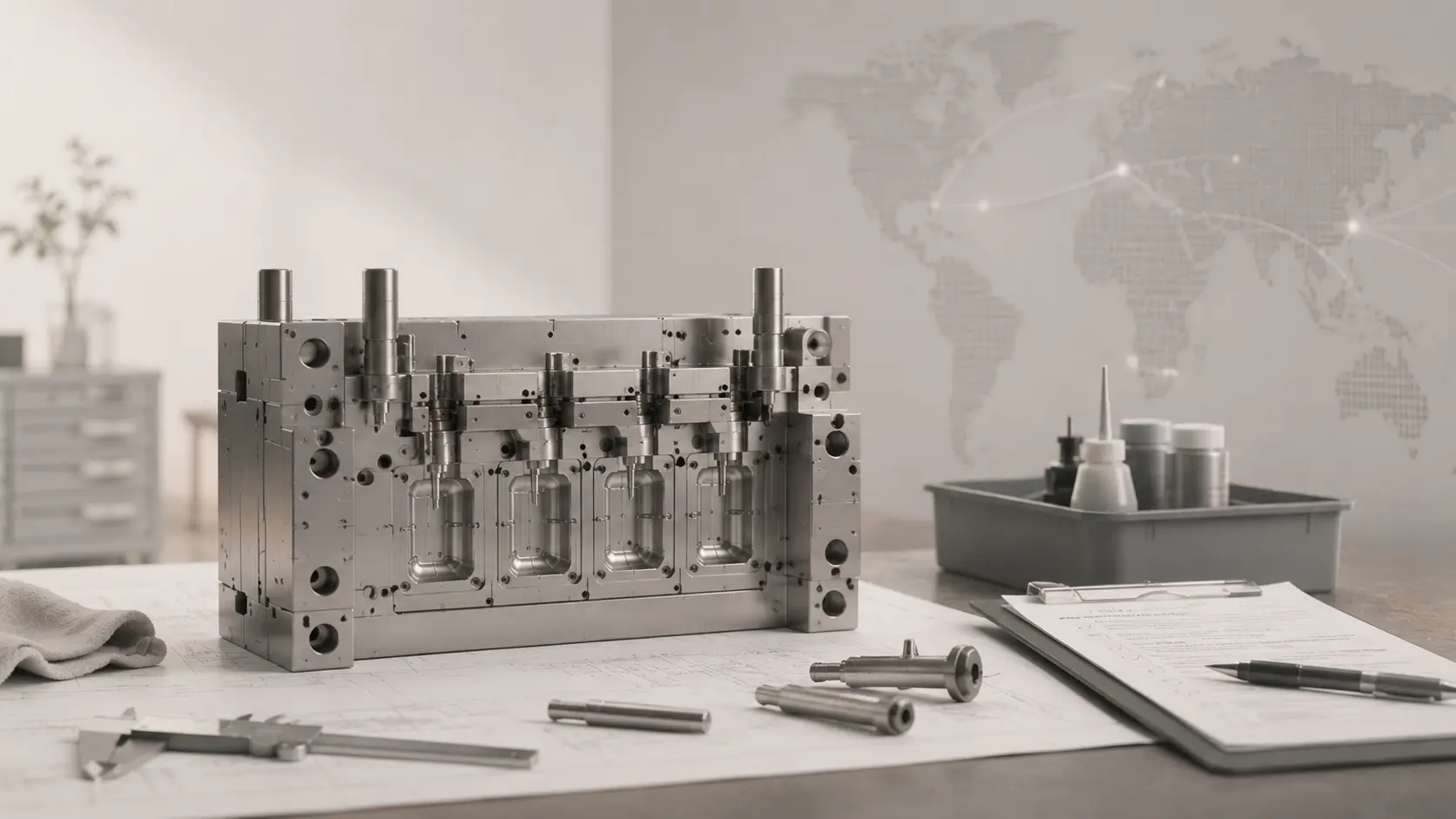
In today’s high-volume, globally distributed manufacturing environment, packaging moulds are no longer just production tools, they are critical assets that directly influence product quality, delivery reliability, and profitability. Poor injection molding mold maintenance and fragmented mold health management practices can ripple across entire supply chains, especially when the same tooling is deployed across multiple plants or contract manufacturers.
As companies scale internationally, consistent mould performance becomes harder to maintain due to variations in operating conditions, materials, maintenance practices, and skill levels. Without a structured global approach, even well-designed moulds can deteriorate quickly, leading to unpredictable output and escalating costs.
Forward-thinking manufacturers are therefore treating mould health as a strategic discipline, combining preventive maintenance, standardized mold cleaning procedures, optimized mold lubrication techniques, and rigorous ejector pin maintenance to ensure consistent performance across regions.
The True Cost of Poor Mould Health Management
The impact of weak mold health management extends far beyond maintenance budgets. It quietly erodes productivity, quality, and customer trust, often without being fully recognised until major failures occur.
Key business costs include:
- Unplanned downtime: A single mould failure can halt production lines, causing cascading delays across supply chains.
- Scrap and rework: Degraded mould conditions lead to dimensional errors, surface defects, and inconsistent parts.
- Higher maintenance expenses: Reactive repairs are significantly more expensive than preventive injection molding mold maintenance programs.
- Shortened mould lifespan: Neglecting routine care accelerates wear, corrosion, and mechanical fatigue.
- Quality and compliance risks: In regulated industries, inconsistent output can trigger audits, recalls, or lost contracts.
Industry analyses suggest that poor tooling health can reduce overall equipment effectiveness (OEE) by 10–20% and increase lifecycle costs by 30–50%.
Conversely, structured maintenance programs, covering systematic mold cleaning procedures, proper mold lubrication techniques, and timely ejector pin maintenance, can dramatically reduce failure rates and extend tool life. For global manufacturers, the difference between reactive and proactive mould management often determines whether operations run smoothly or remain vulnerable to costly disruptions.
What Is Mould Health? A Comprehensive Definition
Mold health management goes far beyond routine cleaning or occasional repairs. It is a multi-dimensional assessment of a mould’s overall ability to produce consistent, high-quality parts efficiently over time.
A healthy mould must perform reliably across several critical dimensions:
- Structural Integrity — Free from cracks, deformation, corrosion, or fatigue that could compromise strength and alignment.
- Surface Quality — Polished cavities and cores without residue build-up, wear marks, or contamination that can affect part finish. Proper mold cleaning procedures are essential here.
- Functional Performance — Stable cycle times, consistent part dimensions, smooth filling, and reliable ejection without sticking or damage.
- Thermal Management — Efficient cooling and heating channels that maintain uniform temperatures and prevent warping or shrinkage variation.
- Mechanical Systems — Smooth operation of slides, lifters, and pins, supported by correct mold lubrication techniques and timely ejector pin maintenance.
Importantly, mould health is not static. Even well-designed tooling degrades with every cycle due to wear, thermal stress, and material exposure. Without structured injection molding mold maintenance, performance gradually declines until defects or failures emerge.
To manage this proactively, many advanced manufacturers use a “mold health score”, a composite indicator based on inspection results, performance data, maintenance history, and defect trends. This score enables teams to track deterioration over time, prioritize interventions, and make data-driven decisions about refurbishment or replacement.
Global Manufacturing Standards & Mould Best Practices
Mould maintenance expectations vary significantly across regions and industries, reflecting differences in regulatory environments, manufacturing maturity, and operational philosophies. However, leading global manufacturers increasingly converge around internationally recognized standards.
Key frameworks influencing mold health management include:
- ISO 14118 — Focuses on machinery safety and prevention of unexpected start-up during maintenance activities, critical for injection molding operations.
- DIN 16901 (Germany) — Provides detailed guidance on mould construction, inspection, and maintenance practices widely adopted in European manufacturing.
- Japanese OEE-Driven Approaches — Emphasize preventive maintenance and continuous improvement to maximize equipment effectiveness and minimize downtime.
- ASTM Standards (USA) — Offer guidelines for material performance, inspection methods, and tooling quality relevant to mould evaluation.
Organizations operating across multiple regions must reconcile these frameworks while maintaining consistent tooling performance. This requires standardized procedures for injection molding mold maintenance, documentation, and performance monitoring.
Efficient Innovations aligns with global best practices while adapting to local manufacturing conditions, ensuring that moulds perform reliably regardless of plant location or operating environment. Their approach integrates standardized maintenance protocols with region-specific considerations such as water quality, operating temperatures, material variations, and workforce skill levels.
As manufacturing enters the era of Industry 4.0, mould management is evolving from manual, schedule-based maintenance to data-driven strategies supported by sensors, analytics, and predictive diagnostics. Global leaders now treat mould health as a continuously monitored asset condition rather than a periodic service activity, an approach that significantly improves reliability, quality consistency, and lifecycle value.
Key Components of Mould Health Management
Effective mold health management is not a single activity but a coordinated system of practices that protect tooling performance throughout its lifecycle. Leading manufacturers structure their approach across multiple technical domains: maintenance, monitoring, cleaning, lubrication, thermal control, and storage, ensuring that no critical factor is overlooked.
Preventive Maintenance Systems
Preventive maintenance forms the foundation of reliable injection molding mold maintenance. Instead of reacting to failures, structured schedules keep moulds operating within optimal conditions.
Typical maintenance layers include:
- Daily: Operator-level cleaning, visual inspections, debris removal, leak checks
- Weekly: Hydraulic integrity checks, cooling performance verification, lubrication review
- Monthly: Detailed mould condition assessments, alignment checks, wear inspection
- Quarterly: Deep cleaning, replacement of high-wear components, calibration checks
Comprehensive documentation is essential. Maintenance logs help teams detect patterns, such as recurring wear points or declining performance, allowing early intervention before failures occur.
Mold Cleaning & Contamination Control
Contamination buildup directly affects surface finish, dimensional accuracy, and tool longevity. Structured mold cleaning procedures are therefore essential.
Key practices include:
- Selecting appropriate solvents (abrasive vs. non-abrasive) based on residue type
- Adjusting cleaning frequency according to processed material (e.g., PVC vs. PP)
- Thorough drying to prevent rust and corrosion
- Recording cleaning activities for traceability
Using proper cleaning methods protects cavity surfaces and prevents micro-damage that can accumulate over time.
Lubrication & Wear Prevention
Correct mold lubrication techniques ensure smooth operation of moving components and reduce mechanical wear.
Critical elements include:
- Mold release agents to facilitate clean part ejection
- Greases and oils for slides, lifters, and pins
- Specialized lubricants for ejector pin maintenance
- Anti-corrosion coatings during downtime or storage
- Defined lubrication intervals to avoid neglect
Both under-lubrication and over-lubrication pose risks; insufficient lubrication accelerates wear, while excessive lubricant can contaminate cavities or attract debris. Proper lubrication can extend component lifespan by 50% or more.
Thermal Management
Temperature stability is essential for both mould health and part quality. Poor thermal control accelerates wear and introduces defects.
Effective thermal management involves:
- Maintaining optimal operating temperature ranges
- Regular flushing and maintenance of cooling channels
- Calibration of temperature controllers
- Monitoring for thermal gradients and hot spots
- Identifying signs of thermal fatigue or stress cracking
Unstable temperatures can cause dimensional variation, warping, and internal stresses in molded parts while simultaneously degrading the mould itself.
Storage & Environmental Control
Even when idle, moulds remain vulnerable to environmental damage. Improper storage can undo years of careful maintenance.
Best practices include:
- Climate-controlled storage environments with controlled humidity
- Protective covers and dedicated storage racks
- Application of rust-preventive coatings for long-term storage
- Safe handling procedures to prevent mechanical damage
- Periodic inspection of stored moulds
Environmental neglect can lead to corrosion, contamination, and mechanical deterioration, making proper storage a critical final component of comprehensive mold health management.
Together, these interconnected systems form a robust framework that protects tooling investments, ensures consistent production quality, and extends mould lifespan across global manufacturing operations.
Common Mould Failure Modes & Prevention Strategies
Even well-maintained tooling will eventually show signs of deterioration. Recognizing early warning signals is critical to effective mold health management and can prevent costly breakdowns, scrap, and downtime. The following failure modes are among the most common in injection moulding operations and the most preventable when addressed proactively.
Mold Wear & Surface Degradation
Mechanical wear accumulates gradually across production cycles, especially in high-volume environments. Left unchecked, it directly affects part quality and dimensional accuracy.
Typical warning signs:
- Flash appearing at parting lines due to poor cavity–core sealing
- Previously polished cavity surfaces becoming rough or matte
- Gradual dimensional drift in molded parts
- Galling or seizing of sliding components
Prevention strategies:
- Scheduled polishing of cavity surfaces to maintain finish quality
- Proper lubrication of moving components
- Cycle count monitoring to trigger maintenance before wear thresholds
- Periodic inspection of parting lines and sealing surfaces
Early intervention preserves surface integrity and prevents minor wear from escalating into structural damage.
Corrosion & Oxidation
Moisture exposure, aggressive polymers, and inadequate storage conditions can lead to corrosion, one of the fastest ways to degrade mould performance.
Typical warning signs:
- Surface rust on steel components
- Pitting that weakens structural integrity
- Corrosion in cooling channels reducing efficiency
- Moisture-induced damage in humid environments
Prevention strategies:
- Dry, climate-controlled storage environments
- Application of anti-corrosion coatings and rust inhibitors
- Thorough drying after cleaning procedures
- Continuous humidity monitoring in storage areas
Environmental control is especially critical for global operations where climate conditions vary widely.
Thermal Stress & Cracking
Repeated heating and cooling cycles generate thermal fatigue, which can lead to microcracks and eventual structural failure—particularly in high-cavitation or high-temperature moulds.
Typical warning signs:
- Fine heat-induced cracks on cavity surfaces
- Distortion or misalignment due to uneven expansion
- Reduced cooling efficiency from scale or deposits
- Increased cycle time variability
Prevention strategies:
- Maintaining stable operating temperatures within specified limits
- Regular flushing and cleaning of cooling channels
- Monitoring temperature gradients to avoid hot spots
- Using appropriate mould steels designed for thermal cycling
Consistent thermal management not only protects the tool but also ensures stable part dimensions.
Ejector Pin & Slider Issues
Mechanical components such as ejector pins, lifters, and sliders endure repeated stress and friction, making them common failure points.
Typical warning signs:
- Bent or sticking ejector pins causing ejection defects
- Scoring or wear marks on sliding surfaces
- Parts sticking in the cavity or ejecting unevenly
- Increased friction due to lubrication breakdown
Prevention strategies:
- Routine inspection and measurement of critical components
- Timely replacement of worn pins, springs, or guides
- Proper lubrication tailored to operating conditions
- Maintaining clean, debris-free movement paths
Consistent ejector pin maintenance is essential to avoid part damage, cycle interruptions, and secondary mould damage.
By identifying these failure modes early and implementing targeted prevention strategies, manufacturers can significantly extend tool life, maintain product quality, and reduce unplanned downtime, key objectives of effective injection molding mold maintenance programs.
Conclusion
Effective injection molding mold maintenance is the foundation of reliable production. Strong mold health management, supported by consistent mold cleaning procedures, precise mold lubrication techniques, and timely ejector pin maintenance, ensures stable output, reduced downtime, and longer tool life. Manufacturers that treat mould care as a continuous system, not a reactive task, gain a clear edge in quality and efficiency.
Frequently Asked Questions
What is mold health management in injection molding?
Mold health management is the systematic monitoring, maintenance, and optimization of mould condition to ensure consistent part quality, reliable operation, and extended tool life. It includes cleaning, lubrication, inspection, repairs, and performance tracking throughout the mould lifecycle.
How often should injection molds be cleaned?
Cleaning frequency depends on material type, production volume, and contamination risk. Operators typically perform daily surface cleaning, with deeper cleaning scheduled weekly or monthly. Abrasive or filled materials require more frequent cleaning to prevent buildup and wear.
What are signs that a mold is failing?
Common indicators include flash at parting lines, dimensional drift, poor surface finish, sticking parts, longer cycle times, corrosion, and unusual noise during operation. Early detection allows corrective action before catastrophic failure occurs.
How can I extend the lifespan of my injection molds?
Implement preventive maintenance, proper lubrication, correct processing parameters, controlled storage conditions, and timely component replacement. Monitoring cycle counts and avoiding thermal and mechanical overload significantly prolong mould service life.
What are global standards for mold maintenance?
Maintenance practices reference standards such as ISO guidelines, DIN specifications, ASTM recommendations, and industry-specific requirements. While principles are universal, implementation varies by region, industry, and regulatory expectations.