Sustainable Packaging Solutions
Sustainable Packaging Solutions for Modern Product Brands
The goal of sustainable packaging is focused on reducing the environmental impact of packaging, it is done while maintaining the functionality, quality and performance required for the product. This can involve reducing material usage, exploring alternative or recycled materials, and improving packaging efficiency through better product and manufacturing design.
Businesses are increasingly evaluating packaging not only for its commercial and functional performance, but also for opportunities to reduce plastic usage, improve material efficiency, incorporate post-consumer resin and meet their sustainability goals. Sustainable packaging development can also support cost reduction through lightweighting and more efficient use of materials.
At Efficient Innovations, sustainable packaging solutions are approached alongside product development, material exploration, testing and manufacturing considerations. This helps ensure that sustainability improvements are practical without compromising the packaging’s intended performance or production requirements.
What Are Sustainable Packaging Solutions?
Sustainable packaging solutions are packaging approaches, which are designed with the intention to reduce material use and environmental impact while maintaining the required functionality, quality and manufacturing performance. They can involve lightweighting, material optimisation, the use of post-consumer resin and exploring alternative materials or processes.
For plastic packaging, sustainability can be addressed through multiple methods like, design optimisation, material efficiency and performance-based development. These are done ensuring that environmental considerations are integrated into the product rather than treated as a separate step. Efficient Innovations’ work includes plastic weight reduction, packaging development, testing and the use of post-consumer resin.
Why Is Sustainable Packaging Important?
Sustainable packaging is more important than ever today because packaging decisions directly influence material consumption, product performance and manufacturing efficiency. A well-optimised design can reduce unnecessary plastic use while continuing to meet functional and quality requirements.
Key benefits include:
- Lower Material Usage through lightweight and weight-reduction initiatives.
- Better Material Efficiency by optimising packaging design and material selection.
- Use of Recycled Content through applications involving post-consumer resin.
- Practical Performance by validating sustainable packaging changes through testing and qualification.
Types of Sustainable Packaging Solutions
Sustainable packaging can be improved through design optimisation, material reduction, refill systems and improved material compatibility. At Efficient Innovations, the focus is on solutions that can be practically moulded, validated and scaled for production.
Lightweight Packaging
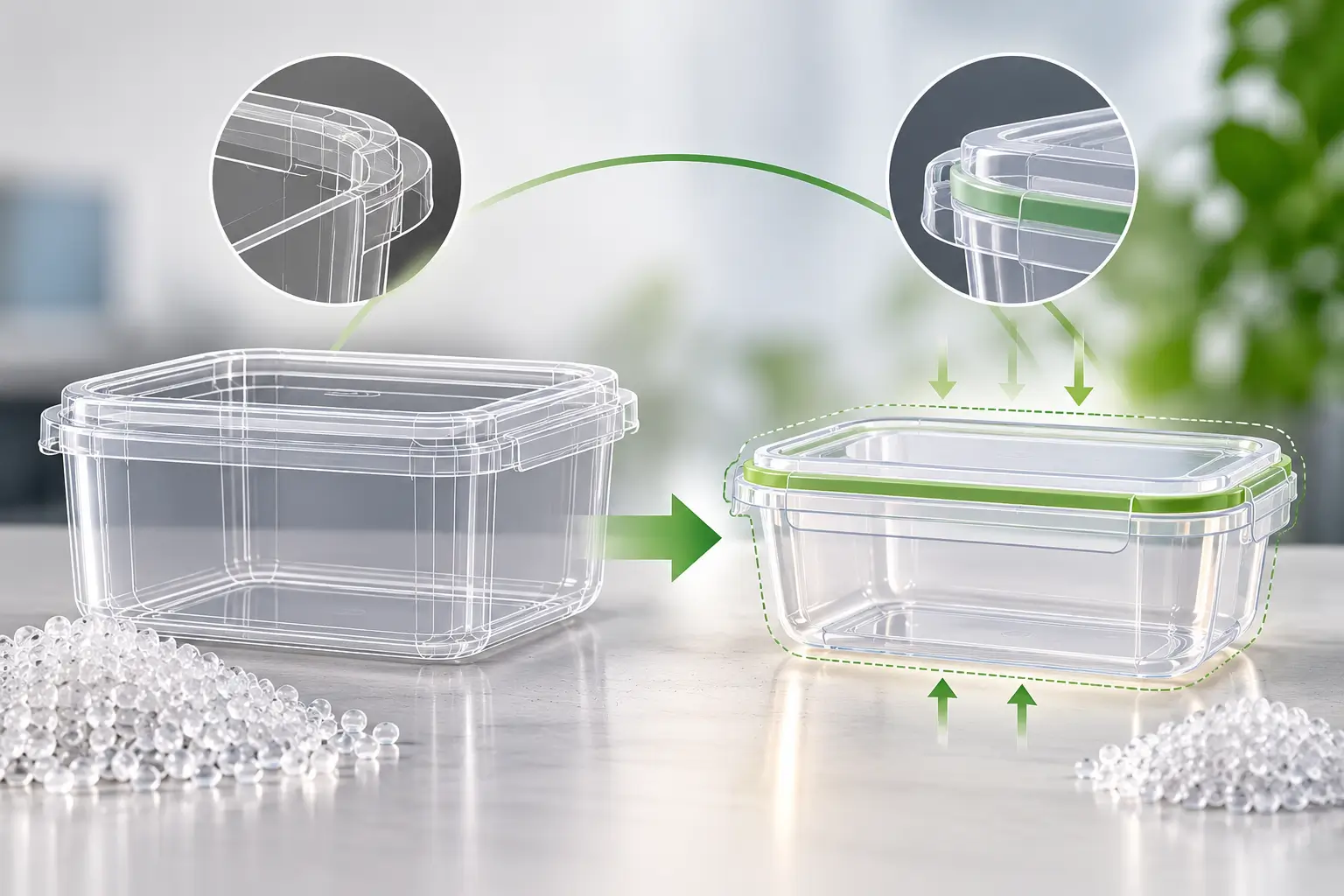
Optimise pack geometry and component design to reduce resin usage while maintaining strength, quality and production stability. Lightweighting projects can achieve 10 to 25% material reduction per pack.
Refill & Reuse Packaging
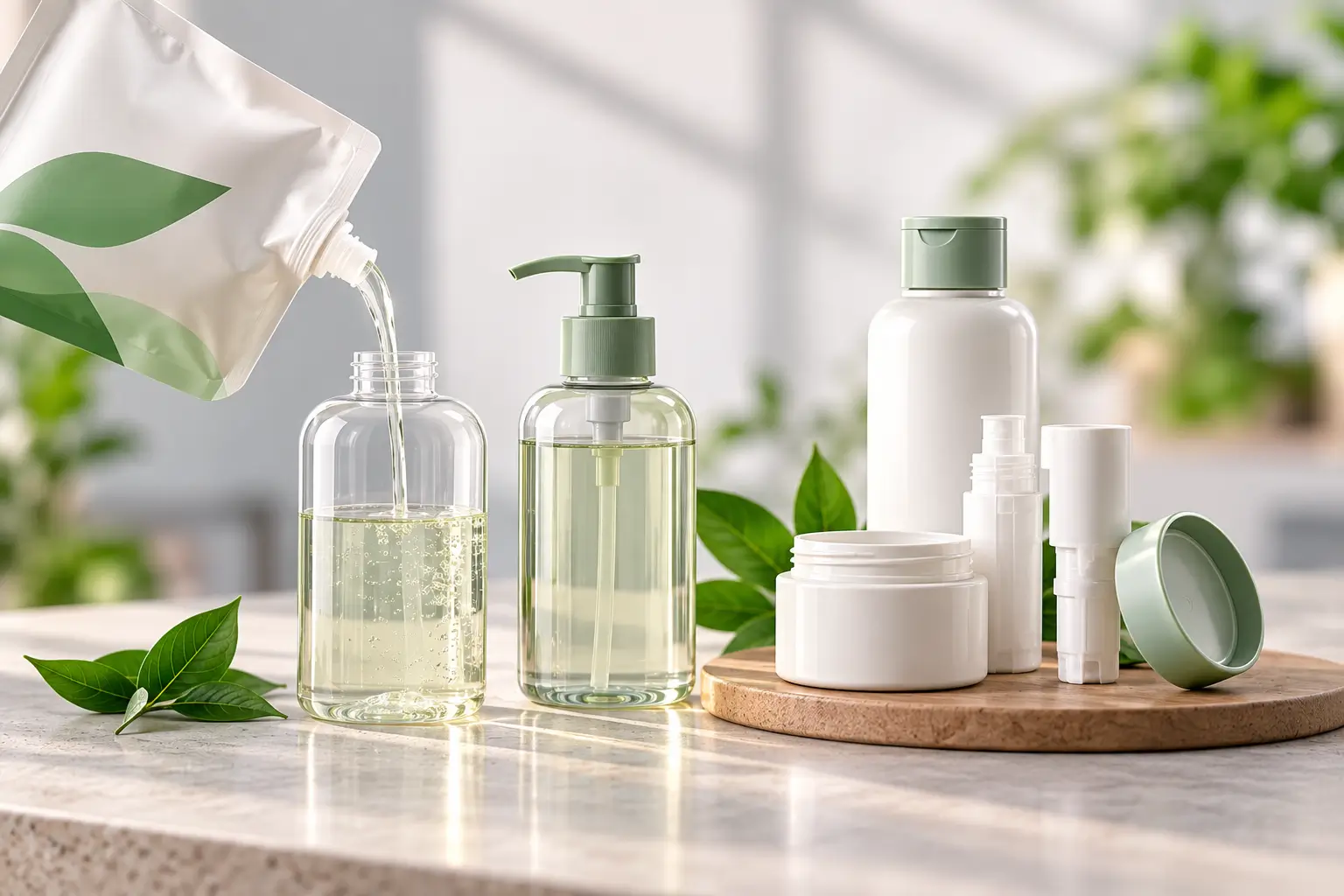
Develop durable packs with refill systems or removable components to support repeated use and extend product life. These solutions can deliver 50 to 80% plastic reduction across the product lifecycle.
Mono-Material & Recyclable Packaging
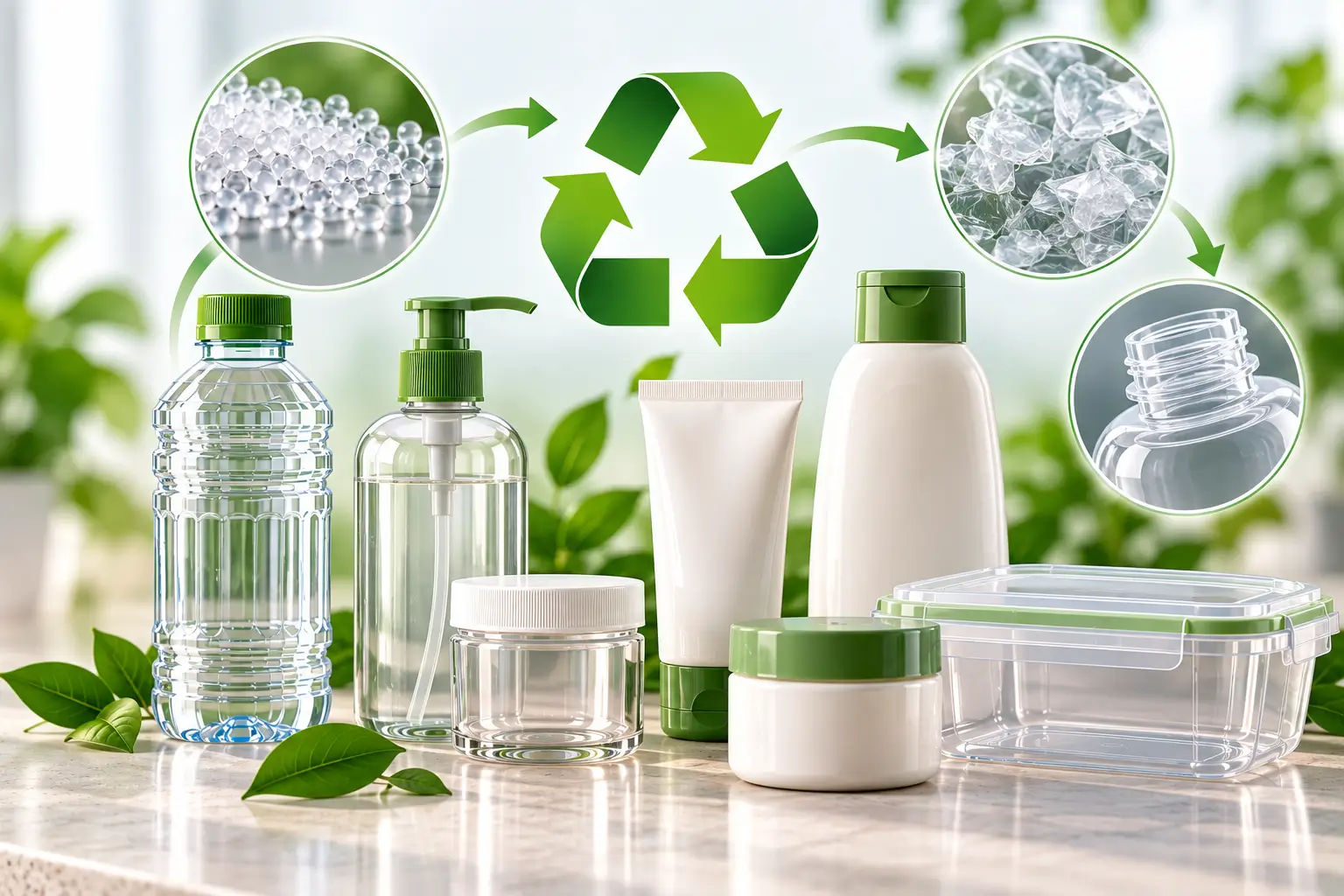
Redesign multi-component packs towards material uniformity or recyclable-compatible combinations to simplify sorting and improve recyclability, while maintaining dimensional, functional and aesthetic requirements.
PCR Packaging
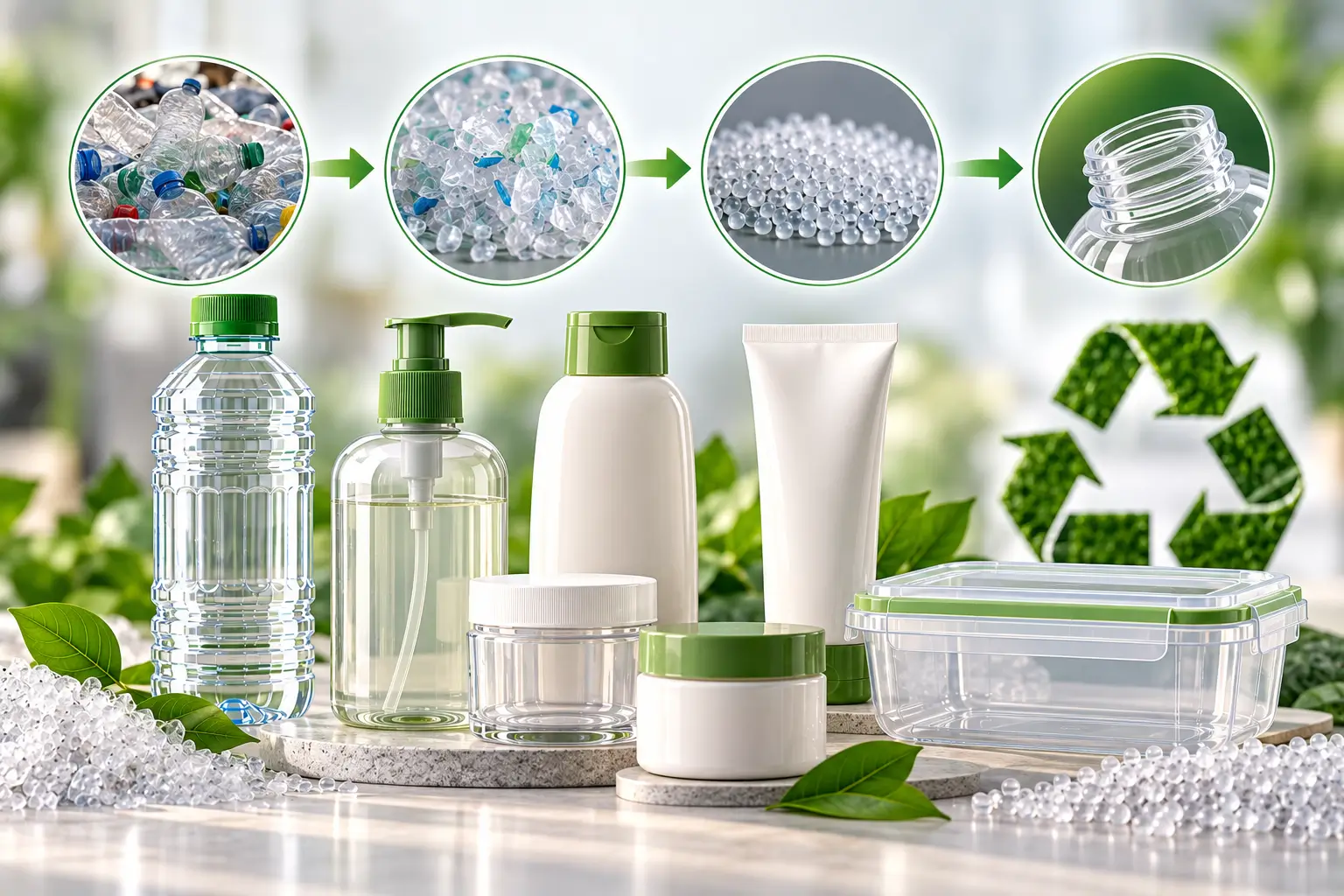
Support the implementation of post-consumer recycled (PCR) plastic by addressing material variability, processing behaviour, shrinkage and tooling compatibility.
Component Reduction
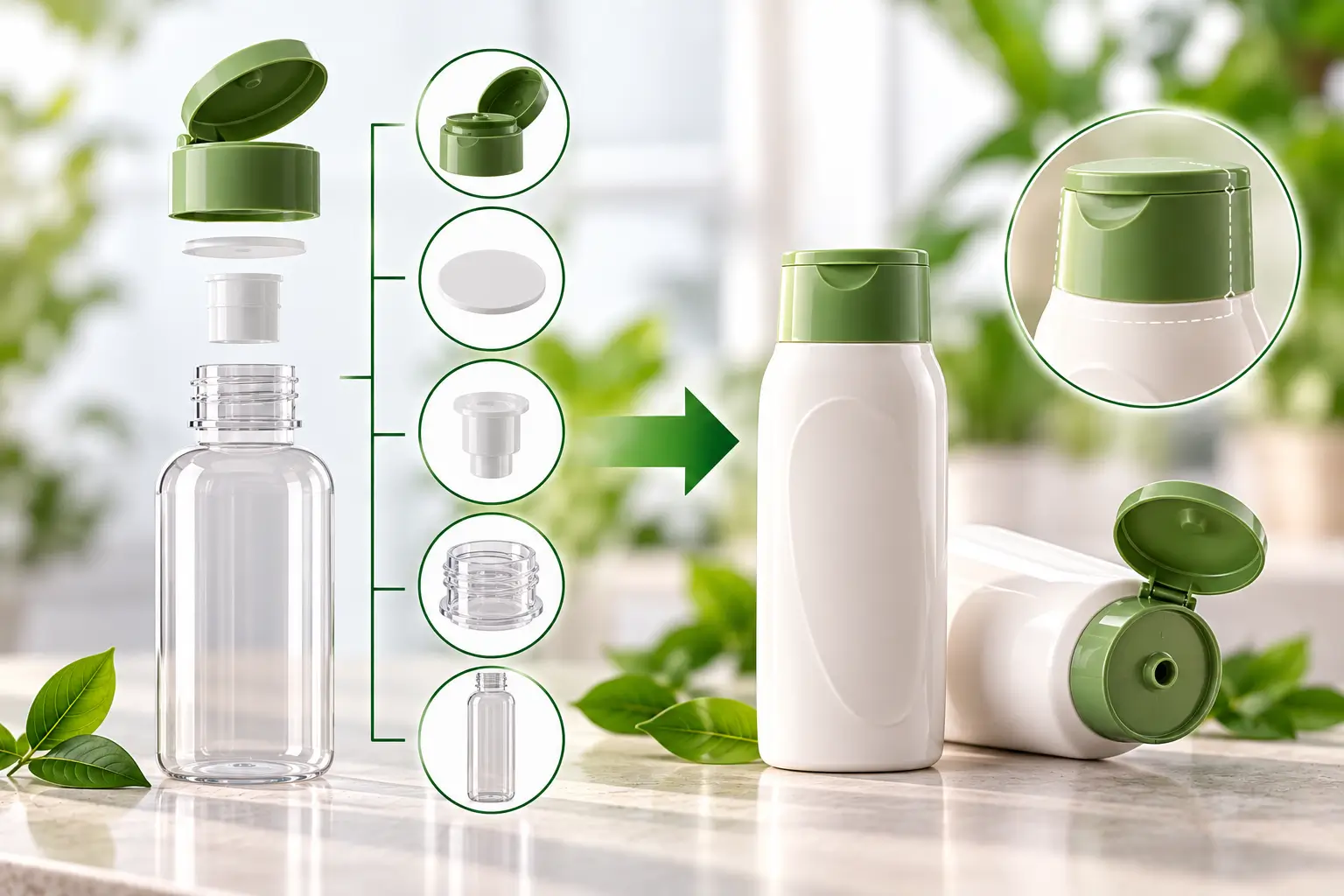
Simplify multi-component packaging through integrated or single-piece designs, reducing material use while also reducing assembly complexity. Documented projects target approximately 20 to 35% material reduction through such redesigns.
How Sustainable Packaging Is Designed
Sustainable packaging is designed as a combination of environmental objectives with product performance and manufacturing feasibility. At Efficient Innovations, the approach can be structured across three stages:
Design & R&D
A lot of times redesign the existing pack or developing a new one to reduce plastic usage can be done. It helps improve recyclability compatibility, enable refill and reuse, or simplify the pack structure.
Process Execution
Validate the sustainability-led design through tooling and process optimisation, material behaviour assessment, cycle-time studies and production trials. This is especially important when changes affect moulding stability, shrinkage, warpage, aesthetics or yield.
Scale & Production
Once the solution is validated, the focus then shifts to repeatable high-volume production with stable quality and performance.
Materials Used in Sustainable Packaging
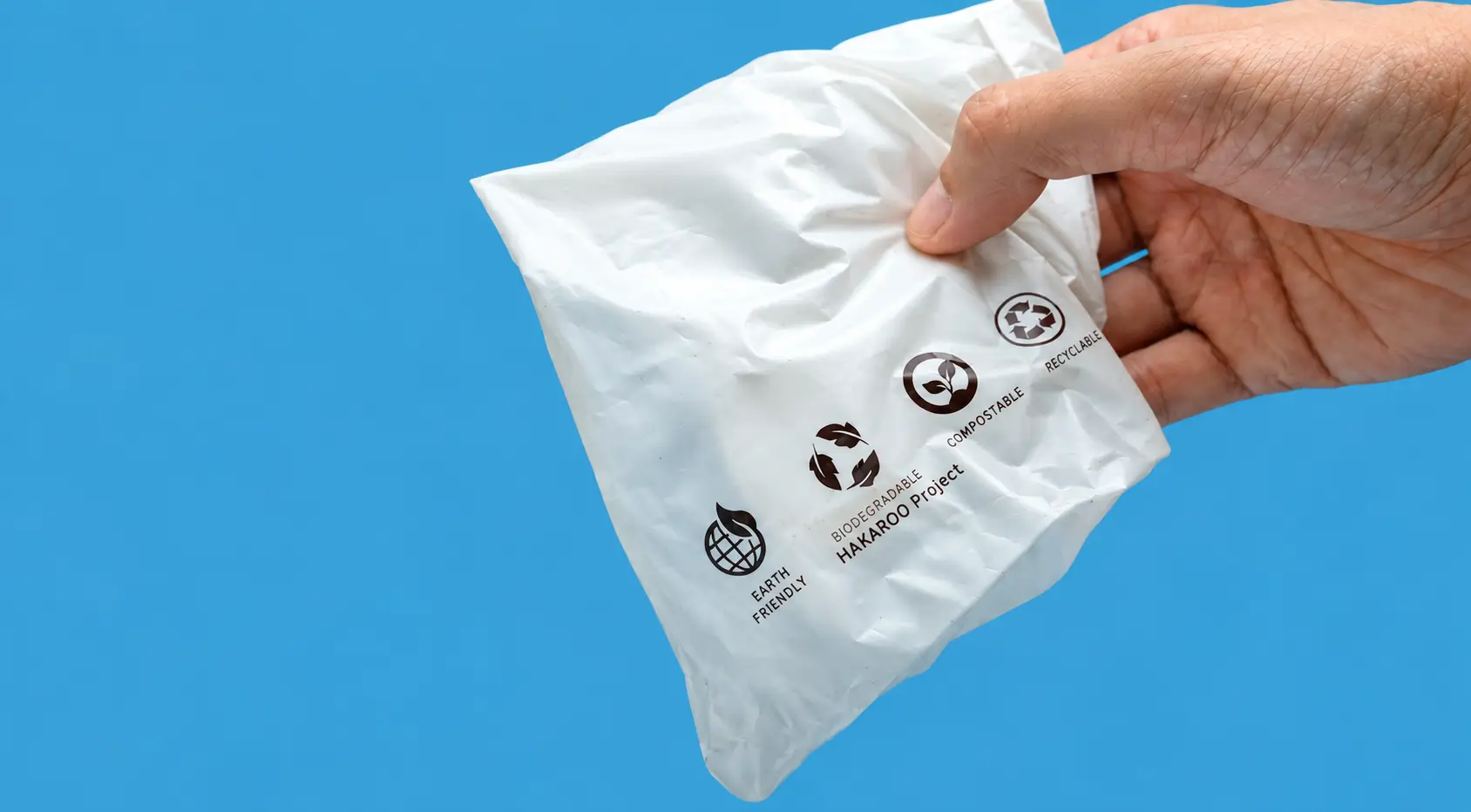
Material selection depends on the packaging design, processing requirements and sustainability objective. Here are a few materials we use:
- Post-Consumer Recycled Plastic (PCR): Support for PCR implementation includes, processing-window development, tooling and cooling optimisation, and evaluation of hot-runner compatibility.
- Mono-Material or Recyclable-Compatible Combinations: Multi-component packs can be redesigned aiming for greater material uniformity to support sorting and recyclability.
- Reduced-Resin Designs: Packaging geometry can be refined to achieve lower material consumption while maintaining required strength and production stability.
- Integrated Component Designs: Multi-component packs can be redesigned into fewer or single-piece components to reduce material use and assembly requirements.
Sustainable Packaging vs Traditional Packaging
Sustainable packaging is not simply a material change. It can involve design optimisation, material reduction, reuse models, recyclability, process efficiency and production stability.
Consideration | Sustainable Packaging | Traditional Packaging |
Material Usage | Focuses on lightweighting and reducing unnecessary material | May use more material than required for the same function |
Pack Structure | Can use component integration and simplified designs | May rely on multi-component constructions |
Material Strategy | Can incorporate PCR or recyclable-compatible material approaches where suitable | May use conventional material configurations |
Reuse | Can support refill and reuse systems | Typically designed around conventional single-use formats |
Manufacturing | Sustainability changes are validated for process stability, quality and scale | Primarily evaluated against existing production requirements |
Cycle Time | Opportunities to improve mould and cooling efficiency can reduce energy use per part | Energy efficiency may not be a primary design objective |
Long-Term Management | Can consider production performance, tooling condition and lifecycle risks alongside sustainability goals | Often focused more narrowly on immediate production requirements |
Efficient Innovations’ sustainability approach specifically connects design changes with tooling optimisation, process-window development and high-volume production support, rather than treating sustainability as a purely conceptual packaging exercise.
How Sustainable Packaging Can Reduce Material Waste
Sustainable packaging helps reduce material waste by working on how much material is used, how the pack is structured and how efficiently it is produced.
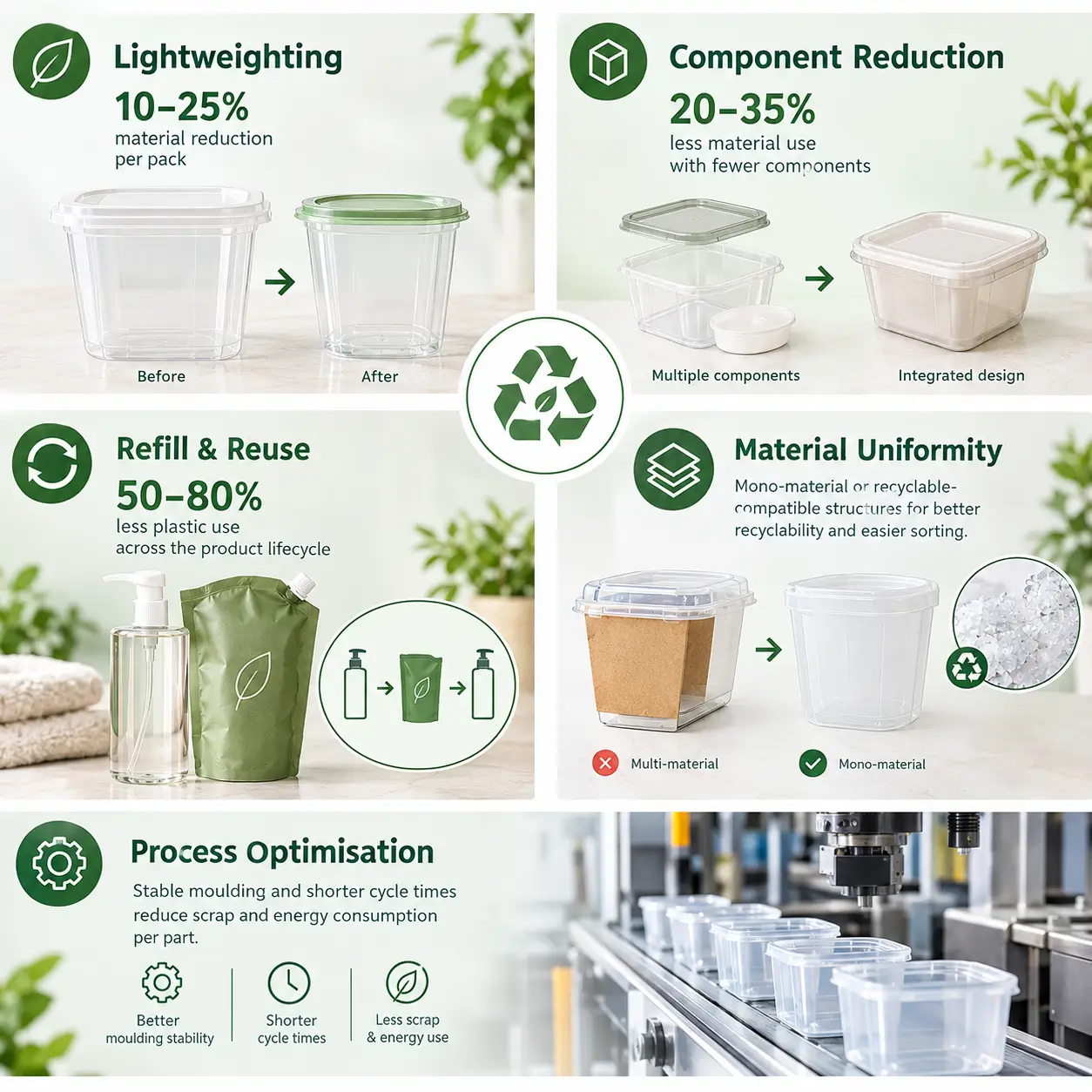
- Lightweighting: Simply optimising pack geometry and reducing wall thickness where possible can deliver 10 to 25% material reduction per pack.
- Component Reduction: By integrating multiple functions into fewer components, it can reduce material use by around 20 to 35% while simplifying assembly.
- Refill & Reuse: Durable refill systems can reduce plastic use by 50 to 80% across the product lifecycle.
- Material Uniformity: A shift towards mono-material or recyclable-compatible pack structures can improve recyclability and reduce complications during sorting and processing.
- Process Optimisation: Stable moulding and shorter cycle times can reduce scrap and energy consumption per part.
Industries That Can Benefit From Sustainable Packaging
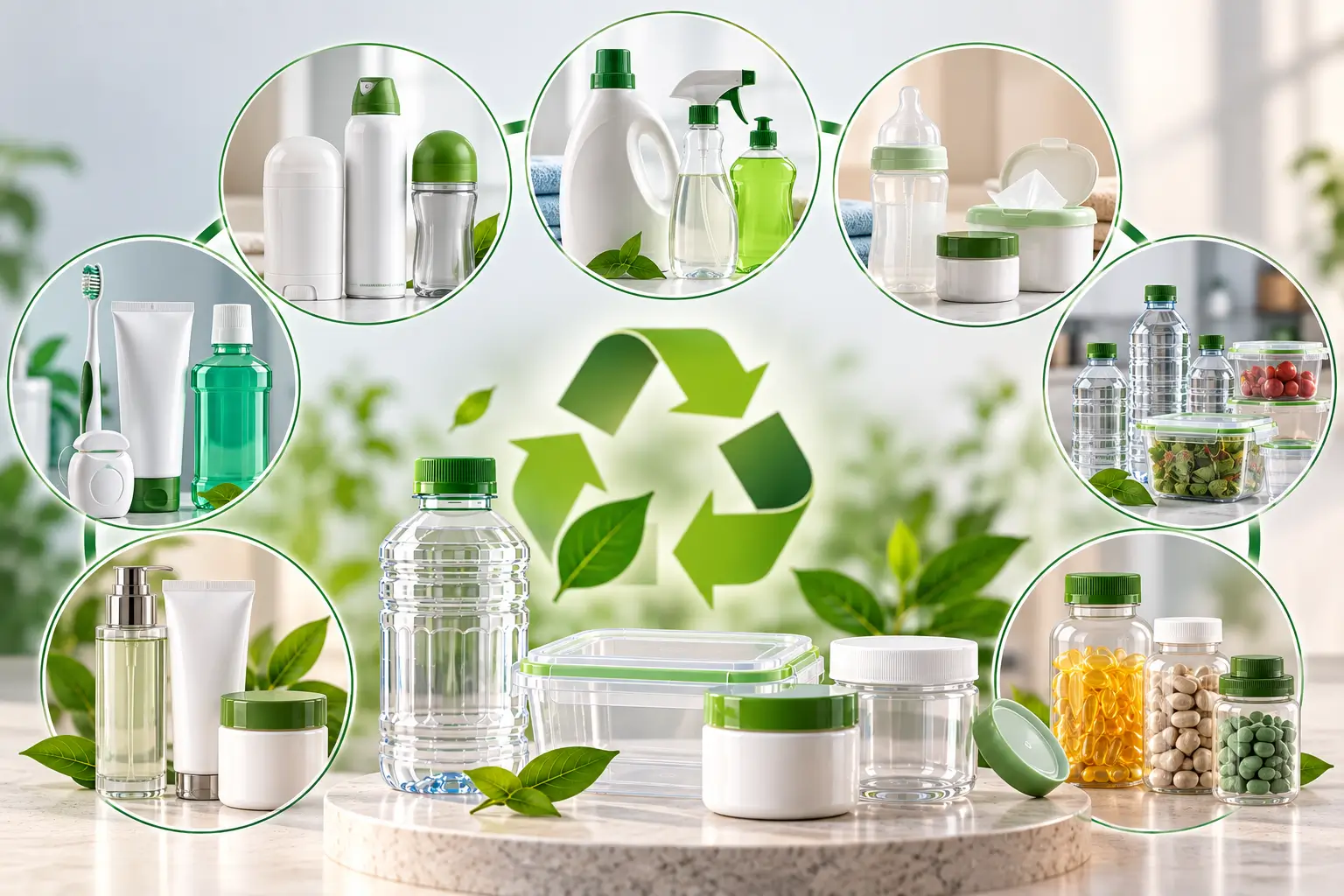
Sustainability-led packaging development can immensely benefit industries using rigid plastic packaging and high-volume manufacturing, including:
- Personal Care and Deodorants
- Household Care
- Baby Care
- Food and Water Packaging
- Oral Care
- Skin Care and Beauty
- Nutraceutical Care
Efficient Innovations’ sustainability work includes rigid-pack lightweighting, refill and reuse systems, component reduction, material uniformity and PCR implementation.
Challenges in Sustainable Packaging Design
Sustainable packaging changes can introduce new technical and production challenges.
PCR Variability:
At times, recycled plastics can show variation in flow, brittleness, odour, colour and scrap rates.
Lightweighting Risks:
Reducing resin requires careful geometry and process optimisation to avoid issues such as warpage, sink marks and unstable production.
Multi-Material Complexity:
Changing material combinations can affect appearance, functionality and processing behaviour.
Tooling Compatibility:
New materials or integrated designs may require mould, cooling or hot-runner modifications.
Scaling to Production:
A sustainable design must deliver consistent quality and performance at high production volumes, not only during development trials.
Our Sustainable Packaging Approach
At Efficient Innovations we connect sustainability goals with product design, tooling and production execution through a structured approach:
Design & R&D → Process Execution → Scale & Production
This includes pack redesign, material reduction, component integration, refill and reuse concepts, PCR implementation, tooling optimisation, process-window development and high-volume production support.
Our focus is always to make sustainability changes manufacturable, scalable and performance-driven, supported by tooling optimisation, material behaviour profiling, process tuning and production execution.
Clients We Work With
We collaborate with forward-thinking clients across industries.
Together, we turn ideas into measurable results.






FAQs
Looking for Sustainable Packaging Solutions? Reach Out to Efficient Innovations!
Sustainable packaging solutions are packaging approaches that precisely aim to reduce environmental impact while maintaining required product performance and manufacturing stability. They can include lightweighting, component reduction, refill and reuse systems, mono-material approaches and the use of post-consumer recycled plastic.
Plastic usage can be reduced through optimised pack geometry, lightweighting, component integration and refill or reuse systems. Depending on the application, our projects have achieved 10 to 25% material reduction through lightweighting, around 20 to 35% through component reduction, and 50 to 80% reduction across the product lifecycle through refill and reuse systems.
Yes, Post-consumer recycled (PCR) plastic can be incorporated into suitable rigid packaging applications. However, PCR might introduce variations in flow, brittleness, odour, colour and scrap rates, so processing windows, tooling, cooling and hot-runner compatibility are evaluated accordingly.
No. Sustainability can be achieved by using less material, simplifying the pack structure, integrating components, enabling refills or improving the efficiency of the existing manufacturing process as well. Material changes are only one part of sustainable packaging development.
Efficient Innovations supports sustainability projects across design and R&D, process execution, and scale and production. This includes pack redesign, material reduction, component integration, PCR implementation, tooling optimisation, process-window development and high-volume production support.