Thin wall packaging allows companies to produce lightweight, strong and cost-efficient plastic packaging. However, when trying to choose an injection moulding machine, clamping force is just one of the factors to consider. Injection speed, injection pressure, shot volume and cycle time are equally important in achieving optimum production efficiency. Efficient Innovations embraces an engineering-centered approach to develop packaging solutions, assisting companies in evaluating the product design, tooling needs and manufacture viability.
Why Thin Wall Packaging Requires Specialised Machine Selection
The Thin wall packaging technique brings special drawbacks as the molten plastic needs to fill a narrow cavity in the mould before solidifying. Not enough speed or injection pressure may result in defects and uneven thickness of the wall of the product.
To ensure proper functioning of a thin wall package making machine, the machine must be capable of producing the right injection and keeping the process conditions unchanged. Machine capabilities should match the design of the mould, the flow of the materials used and the shape of the package. When producing in vast amounts, even small deviations may cause increases in rejections and waste of materials. Therefore, a machine suitable for producing thin wall packages must be carefully chosen to ensure good product quality and effectiveness of the manufacturing process.
Why Clamp Tonnage Alone Is Not Enough
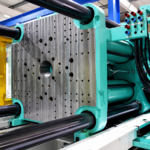
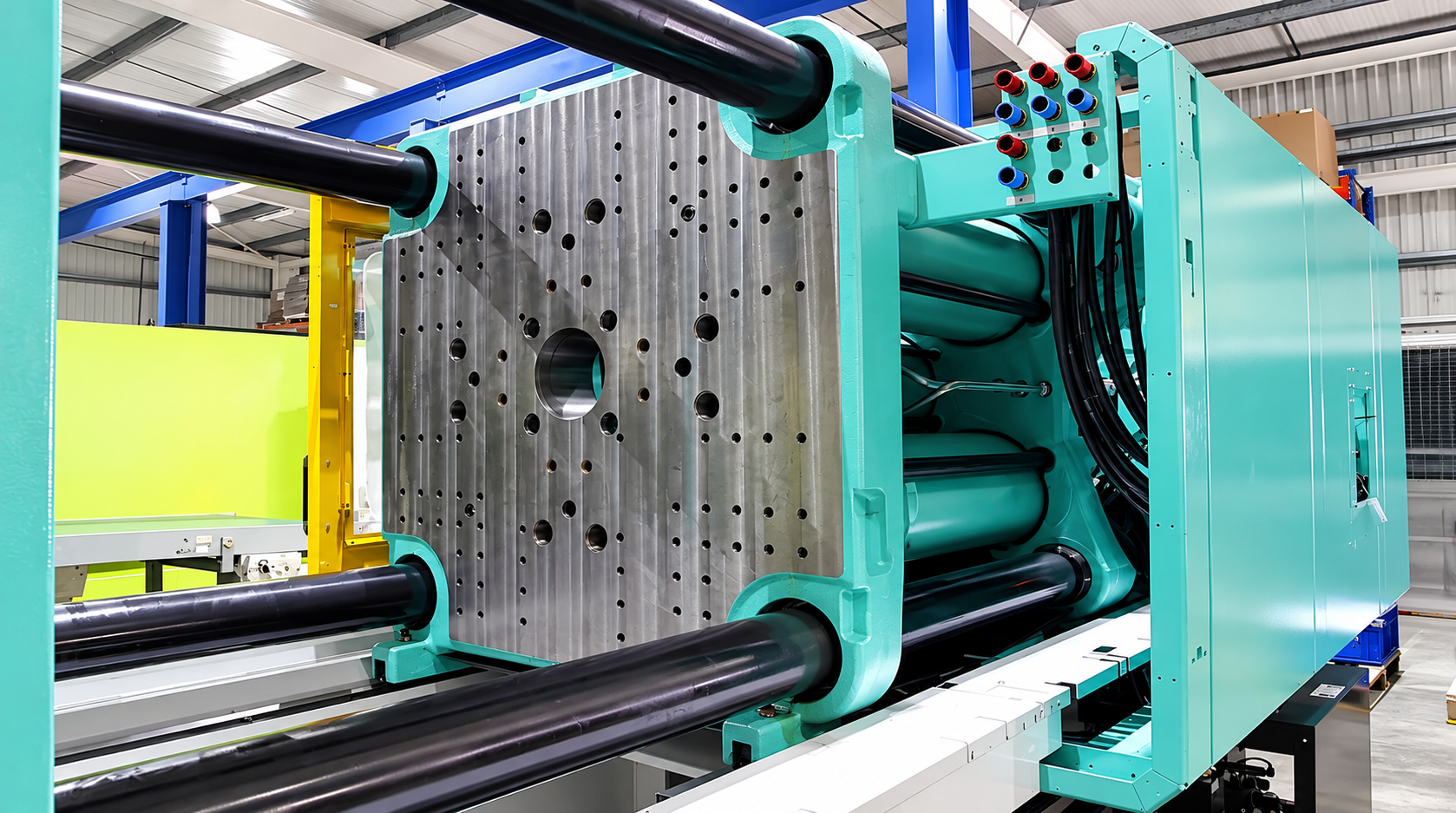
Injection moulding clamp tonnage is defined as the capacity necessary for maintaining the closed state of the mould. A proper level of clamping force is important to prevent the moulds halves moving apart because of the cavity pressure.
The amount of force required will depend on the total surface area of moulded parts, cavity pressure, characteristics of the materials used, and configuration of the mould. Wall thickness and filling conditions also have an effect on the necessary cavity pressure.
Though high tonnage is of no use in cases where low injection speed, low pressure and low shot volume are used. The machine can have enough clamping force at the same time having problems filling thin filaments.
Choosing the right machine implies a balanced evaluation of clamping force, injection performance, plasticising ability, mould compatibility and production objectives.
Key Machine Specifications to Evaluate
The selection of a machine entails the examination of important specifications which affect the filling process, compatibility with moulds, efficiency of production as well as maintenance of quality of output.
Injection Speed and Injection Rate
The injection speed refers to the speed of the screw and the injection rate describes the amount of molten polymer supplied within a given period of time. Also, it is worth mentioning that thin-wall injection moulding usually presupposes a high rate of injection in order to be able to fill the narrow space in the mould before the polymer solidifies. It is important for the machine to sustain the good filling properties during the injection period.
Injection Pressure and Moulding Ability
Injection pressure helps molten polymer in entering into the cavities through the runner system. Some properties, such as those of polymers, the thickness of the wails of the object to be moulded, the configuration of the gates as well as the length of the cavities cause great resistance to the flow of molten polymer during the moulding process.
Shot Capacity and Plasticising Performance
The ability to shoot capacity specifies what quantity of the material can be provided by the injection unit in one cycle. Shot capacity takes into account the total weight of the parts and the volume of the runners across all cavities. The performance of the plasticising system is equally significant because it has to give enough quantity of uniform material in a melt state and prevent delays in production.
Clamp Force and Mould Compatibility
The clamping force has to counteract the force acting through the area of the rendered mould. Manufacturers have also to check the size of the platen, the distance of the tie bars as well as the thickness and the opening of the mould. Even a machine that has enough tonnage may not be suitable if its physical parameters do not allow it to use the forms.
Cycle Time and Process Repeatability
The injection moulding cycle time encompasses filling, packing, cooling, mould opening, and ejecting. Injection speed is not the only factor defining the efficiency of the entire system. Cooling requirements, the efficiency of the plasticising process and the activity of the moulding machine may also become choking points.
Automation and Production Requirements
In high-volume production operations, inclusion of automated processes for part removal and stacking, inspection, and handling is a must. Machine controls and interfaces must be built to ensure seamless integration of the automation system in operation. While considering the complete production setup, manufacturers must take into account the maintenance aspect along with the operations cost and factory layout.
Factors to Consider When Selecting a Thin Wall Packaging Machine
The injection moulding machine selection varies with product specifications, type of tooling to be used and manufacturing requirements. Some of the key elements comprise:
- Container geometry: Size, wall thickness, shape and weight of the product.
- Plastic material: Flow characteristics, processing temperatures and cooling rates.
- Mould configuration:Number of cavities, dimensions and design of gate and runners.
- Production targets:Output needed, cycle time and volumes.
- Machine specifications:Injection rate, pressure, shot size and clamp force.
- Operational efficiency: Energy consumption, maintenance costs and automation compatibility set.
Comparison of injection moulding machine specifications and these factors allow producers to determine the right machine to fit your technical needs without excess capacity that could raise running costs.
Common Problems Caused by Incorrect Machine Selection
Manufacture problems resulting from an inappropriate machine:
- Short shots: Creation of defects due to improper filling of the cavity, which is caused both by inadequate injection and process conditions.
- Flash: Excess material appears at the machined parting line because of insufficient clamping force and excessive cavity pressure.
- Part weight variations: Part weight variation takes place due to inconsistencies in the injection or plasticising procedures.
- Increase in costs: Indirect expenditure arises because of increase in cycle time.
- Long cycle time: Delays happen due to insufficient capacity or cooling.
- Higher scrap rates: Problems that cause high scrap and increase in production costs.
Appropriate selection of machinery combined with the right tooling and optimisation of the process can reduce these risks.
How to Match the Machine, Mould and Product Requirements
- Finalise the design specifications. Design specifications should include the measurements, thickness of walls, weight, and goals of production.
- Validate the Mould: Verify area of the surface, number of cavitations and pneumatic controls.
- Inspect machinery specifications: Determine clamping mechanics, capability of injection action, pressure, and quantity of injection process.
- Verify the compatibility mould: Confirm dimensions, compatibility, and cycle time machine & mould.
- Check the results: Often test the product and process so as to ensure the quality of the end product.
- Approve the process of production: Ensure the work is on course according to the laid-down plans.
Benefits of Correct Machine Selection for Thin-Wall Packaging
A matching machine and mould can provide a more consistent quality product, more dependable cavity filling and more stable cycle times. The right thin wall packaging machine choice can help minimise rejected parts and other material losses, and prevent production downtime. Good repeatability can lead to tighter cost control, and extra machine capacity sets the stage for growing production rates.
Applications in Thin-Wall Container Manufacturing
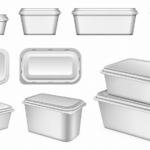
Thin-wall packaging is common for food containers, tubs, cups and lids, and other lightweight rigid plastic packaging. Speed of mould fill, dimensions control and high-volume manufacturing are all common considerations. Requirements for machines depend on the final product design, type of polymer used and tooling layout.
Why Choose Efficient Innovations for Thin-Wall Packaging Development?
Efficient Innovations employs an engineering focus to the development of packaging, including aspects of product design and manufacturability, and tooling considerations. Analysing the connections between component geometry, the mould design and the limits of production can reveal issues early on.
In thin wall packaging applications, the project’s simulation outcomes support technical decision-making, design for manufacturability and the assessment of production requirements. These insights are valuable in thin wall container manufacturing, helping establish the first steps towards tooling validation and manufacturing readiness.
Talk to Efficient Innovations About Thin Wall Packaging
A decision on what type of machine to use for a thin-wall package is based on an analysis of product design, qualification of the mould and its processing ability. Clamp tonnage is a factor but only one component.
Searching for a machine for the production of thin wall packaging? Reach out to Efficient Innovations for engineering-led packaging design and manufacturing assistance.
FAQs About Thin Wall Packaging Machine Selection
1. What type of machine is suitable for thin wall packaging?
The thin wall injection moulding machine used for the appropriate injection moulding has adequate injection speed, pressure, shot capacity and clamping force for the product and the mould.
2. How do you calculate injection moulding clamp tonnage?
Estimate the total clamping force required, take the total projected area of the moulded parts and associated runners; and multiply it by the expected cavity pressure. Confirm the calculation with process data and with your vendor.
3. Why is injection speed important in thin wall injection moulding?
If the speed of injection is too slow, the molten material will freeze in the narrow region, thus, any possible draw in is prevented.
4. What machine specifications affect injection moulding cycle time?
Injection moulding cycle time time is affected by injection speed, capacity for plasticising, cooling time, movements of the mould, ejection and automation.
5. How do you match an injection moulding machine to a thin-wall container mould?
Test the project area, cavity number, shot size, volume, injected volume, clamping force and mould dimensions. Confirm the choice with the help of production trials.