
Key Takeaways
- Rigid plastic packaging is no longer just functional, it is evolving into a strategic tool where sustainability, compliance, and consumer communication must work together seamlessly.
- From transparency and smart labeling to e-commerce-ready designs, discover how shifting consumer expectations are quietly redefining rigid plastic packaging trends.
- The real advantage lies in balancing it all, where functionality, sustainability, and innovation come together to create packaging that is not just compliant, but future-ready.
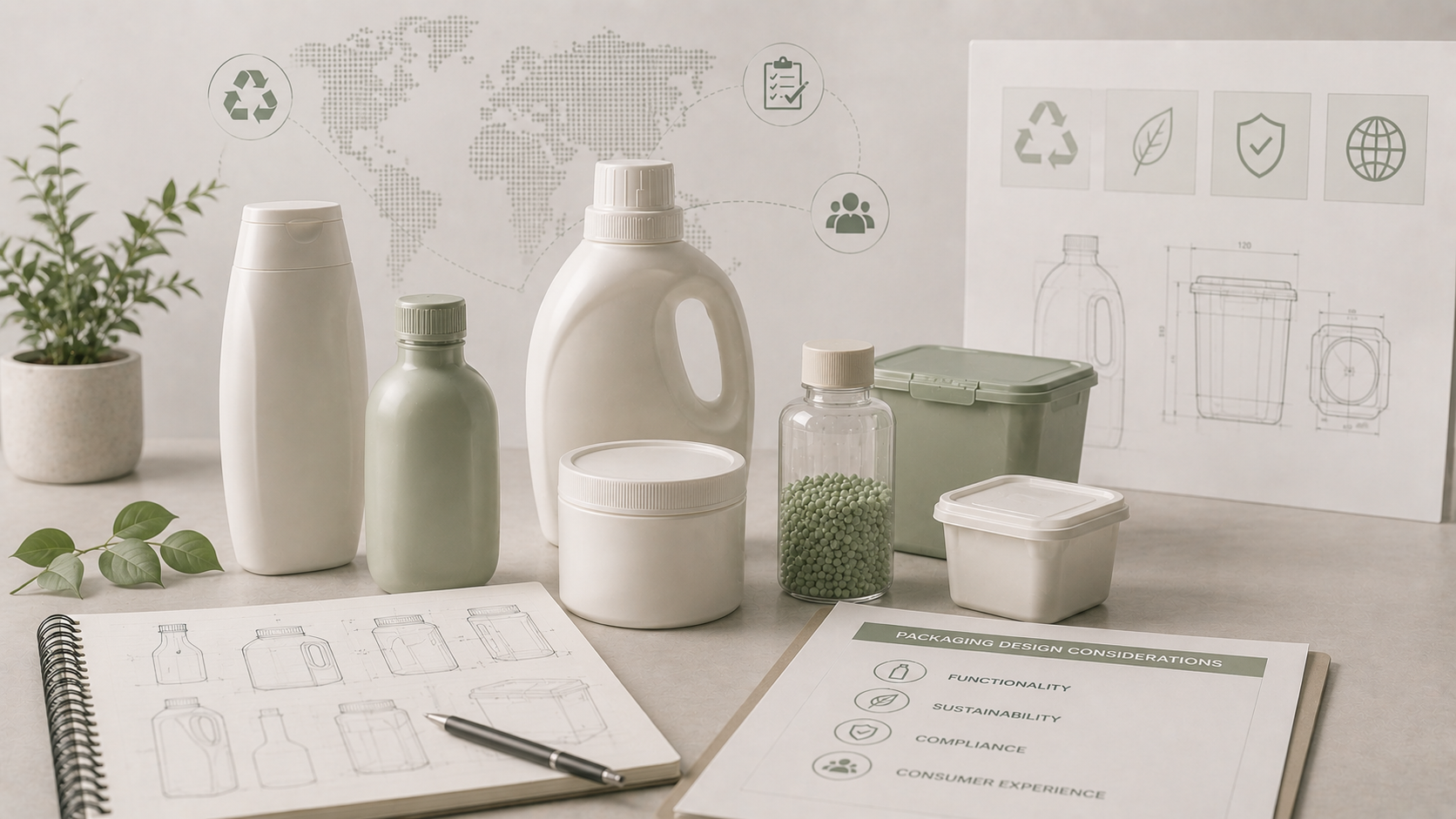
Rigid plastic packaging is no longer just about protection. In today’s plastic packaging market, it must deliver performance, sustainability, regulatory compliance, and clear consumer communication all at once.
This shift is redefining design priorities. Brands now need to balance strength with lightweighting, recyclability with usability, and compliance with evolving global regulations such as Extended Producer Responsibility. At the same time, rigid plastic packaging is becoming a communication tool, using labels and digital features like QR codes to improve transparency and trust.
This blog explores how these factors are shaping modern rigid plastic packaging, from sustainability and compliance to technology and consumer-driven design. It offers a clear view of how to create packaging that is not only functional, but also future-ready.
Trend 4: Consumer Transparency & On-Pack Communication
Another key shift shaping rigid plastic packaging trends is the growing demand for transparency from consumers. Today’s buyers want to know more than just what a product is; they want visibility into where it came from, how it was made, how sustainable it is, and how to dispose of the packaging responsibly.
As a result, rigid plastic packaging is increasingly becoming a communication platform rather than just a protective container. Brands are using packaging surfaces and digital extensions to educate consumers, share sustainability initiatives, and strengthen trust.
Modern plastic packaging market strategies now incorporate:
- Clear recycling instructions and sustainability claims
- QR codes linking to extended product and sourcing information
- Digital storytelling through augmented reality (AR) or mobile experiences
- Transparent communication about materials and environmental impact
This shift toward radical transparency is not only about regulatory compliance, but it is also a powerful driver of brand loyalty. Consumers increasingly reward brands that communicate clearly and responsibly about their packaging choices.
Designing for Consumer Communication: Labels, QR Codes, and Beyond
Effective communication through rigid plastic packaging requires careful design because packaging surfaces offer limited space. Brands must balance product branding, regulatory information, and sustainability messaging within a compact format.
Best practices for packaging communication include:
- Clear information hierarchy
Prioritize essential information such as product identity, recycling instructions, and sustainability claims. - Strategic QR code placement
QR codes should be visible and easy to scan without interfering with brand design. - Smart labeling strategies
Labels can provide layered information—basic guidance on the package, with deeper digital content accessible through QR codes. - Audience-specific messaging
Smart packaging systems can deliver different types of information:- Consumers receive product details and sustainability education
- Recyclers receive sorting or material identification information
However, companies must also balance communication goals with practical considerations such as label size, packaging aesthetics, production costs, and regulatory labeling requirements.
Well-designed packaging communication improves consumer engagement while maintaining the visual appeal of rigid plastic packaging.
Standardized Labeling Systems: Building Consumer Trust
One of the biggest challenges in the plastic packaging market today is consumer confusion. Different brands use different sustainability labels, making it difficult for consumers to understand how to properly dispose of packaging or evaluate environmental claims.
Standardized labeling systems are emerging to address this issue.
These systems aim to:
- Provide consistent recycling instructions across products and brands
- Improve consumer understanding of sustainability claims
- Support better sorting and recycling outcomes
Examples of emerging initiatives include:
- Digital product passports, which provide detailed lifecycle information about packaging materials
- Circularity labels indicating recyclability and recycled content
- Standardized sustainability icons that simplify consumer decision-making
Brands that adopt these standards early can position themselves as leaders in transparency and responsible packaging design. By making sustainability information clear and consistent, companies strengthen consumer trust while supporting broader circular economy goals.
In an environment where trust and transparency increasingly influence purchasing decisions, effective on-pack communication is becoming a defining element of modern rigid plastic packaging trends.\
Trend 5: Functionality & Convenience in Sustainable Packaging
As sustainability becomes central to rigid plastic packaging trends, brands face a critical challenge: environmental improvements must not compromise user experience. Consumers still expect packaging to be convenient, protective, and easy to use. If sustainable packaging reduces functionality, adoption quickly declines.
For FMCG companies operating in the plastic packaging market, the goal is to deliver both sustainability and usability.
Key functional requirements shaping modern rigid plastic packaging include:
- Single-serve and portion-controlled formats for convenience and reduced waste
- Resealable packaging that maintains product freshness
- Tamper-evident designs that ensure product safety
- Durable packaging structures capable of surviving e-commerce logistics
- Easy disposal or recyclability that aligns with sustainability goals
Consumers are willing to support environmentally responsible packaging, but only if it maintains convenience. As a result, successful packaging solutions must optimize both sustainability and usability, rather than treating them as trade-offs.
E-Commerce Packaging: Protection Meets Sustainability
The growth of online retail has introduced new demands for rigid plastic packaging design. Packaging must now protect products through extended shipping journeys while also meeting sustainability expectations.
Key performance requirements include:
- Impact resistance during transportation
- Temperature stability for perishable food items
- Compact designs that reduce shipping volume
- Recyclable or reusable materials
Innovations addressing these challenges include:
- Lightweight insulated packaging materials that maintain temperature while reducing weight
- Reusable packaging systems designed for return logistics
- Optimized case designs that improve shipping efficiency and reduce empty space
This creates a unique paradox in the plastic packaging market: consumers demand faster delivery with less packaging waste. Companies that successfully solve both challenges gain a significant competitive advantage.
Single-Serve & Portion Control: Meeting Modern Consumption Patterns
Consumer lifestyles are also reshaping packaging formats. Busy schedules and on-the-go consumption are driving demand for single-serve and portion-controlled packaging.
Common examples include:
- Individual yogurt containers
- Snack-sized food packaging
- Beverage portion packs
- Ready-to-eat meal containers
While convenient, these formats present sustainability challenges because they often have higher material-to-product ratios.
To address this, packaging designers are exploring solutions such as:
- Shared packaging structures that combine multiple portions in one unit
- Stackable packaging designs that improve logistics efficiency
- Material-efficient packaging formats that reduce plastic usage
Portion control also supports sustainability goals by helping reduce food waste and over-consumption, which are major environmental concerns in the FMCG sector.
Tamper-Evident & Security Features in an E-Commerce World
As more FMCG products are delivered directly to consumers’ homes, packaging security has become increasingly important. Consumers want reassurance that products have not been opened or altered during shipping.
Modern rigid plastic packaging incorporates several tamper-evident solutions:
- Breakable seals and tear bands
- Induction sealing for food and beverage containers
- Security labels and adhesive seals
Some brands are also integrating smart packaging technologies such as serialisation, QR-based authentication, and track-and-trace systems. These features improve product authentication and strengthen supply chain transparency.
While security features add cost, they also enhance consumer confidence and brand protection, especially in e-commerce environments where customers cannot physically inspect products before purchase.
In the evolving plastic packaging market, the most successful packaging designs are those that combine security, sustainability, and convenience without compromising product protection or consumer experience.
Best Practices for Rigid Packaging Innovation in 2026
As rigid plastic packaging trends evolve, FMCG brands must move from reactive adjustments to proactive innovation. The most successful companies treat packaging as a strategic capability, aligning sustainability, regulatory compliance, consumer communication, and operational efficiency.
A practical framework for innovation in the plastic packaging market includes the following steps:
- Audit current packaging against 2026 requirements
Evaluate whether existing rigid plastic packaging formats meet sustainability targets, recyclability expectations, and upcoming regulations. - Identify redesign opportunities
Explore lightweighting, mono-material structures, improved recyclability, and enhanced functionality. - Assess regulatory risks early
Map regional regulations, EPR obligations, and future compliance deadlines. - Plan technology integration
Incorporate smart packaging, traceability tools, and digital supply chain visibility. - Develop a stakeholder communication strategy
Ensure consumers, retailers, and regulators clearly understand packaging sustainability and disposal guidance.
This approach enables FMCG brands to transition from incremental improvements to strategic packaging transformation.
Establish a Cross-Functional Packaging Committee
Packaging decisions affect nearly every part of an FMCG organization. To ensure alignment, companies should establish a cross-functional packaging committee that includes representatives from:
- Procurement
- Sustainability teams
- Regulatory compliance specialists
- Research and development (R&D)
- Marketing and brand teams
This structure ensures packaging innovations support operational, regulatory, and brand objectives simultaneously. When these departments collaborate early, companies avoid costly redesigns, conflicting priorities, and project delays.
Conduct a Packaging Audit Against 2026–2027 Requirements
A structured packaging audit helps companies evaluate whether current rigid plastic packaging solutions meet future expectations.
Key areas to review include:
Sustainability Metrics
- Carbon footprint of packaging materials
- Percentage of recycled content (PCR)
- End-of-life options (recyclable, reusable, compostable)
Regulatory Compliance
- Regional plastic restrictions and bans
- Extended Producer Responsibility (EPR) obligations
- Labeling and traceability requirements
Material Sourcing
- Availability and quality of PCR materials
- Supplier capacity and cost stability
- Compatibility with recycling systems
The audit should identify gaps between current packaging and upcoming regulatory or sustainability targets, allowing companies to prioritize redesign initiatives.
Build Relationships with Innovation Partners Early
Developing new rigid plastic packaging solutions often requires long lead times. New materials, mould designs, and production capabilities can take 12–18 months to implement.
Engaging with packaging technology partners early allows FMCG brands to:
- Explore emerging rigid plastic packaging trends
- Test new materials and packaging structures
- Conduct pilot programs before full production deployment
- Reduce the risk of falling behind regulatory timelines
Companies such as Efficient Innovations support collaborative innovation models that include:
- Co-development programs for packaging redesign
- Pilot projects to validate new materials or manufacturing processes
- Continuous improvement partnerships that adapt packaging systems as regulations evolve
Early collaboration ensures smoother transitions and more resilient packaging strategies.
Invest in Transparency & Communication Infrastructure
Consumer expectations for transparency are rapidly increasing. FMCG brands must build systems that enable clear communication about packaging materials, sustainability commitments, and disposal instructions.
This requires investment in digital communication infrastructure such as:
- QR code strategies linking consumers to detailed product information
- Sustainability data collection systems tracking packaging materials and recycling metrics
- Supply chain visibility tools that support traceability and compliance reporting
Transparent communication strengthens consumer trust while supporting regulatory compliance.
In the evolving plastic packaging market, companies that integrate transparency into their packaging strategies not only meet compliance requirements but also build stronger customer relationships and long-term brand loyalty.
Conclusion
Rigid plastic packaging today must deliver more than protection. It needs to balance functionality, sustainability, and compliance within the evolving plastic packaging market.
As rigid plastic packaging trends advance, success depends on integrating smarter design, clear consumer communication, and regulatory alignment from the start. Every decision now impacts performance, trust, and long-term viability.
FMCG brands that adapt early will be better positioned to create rigid plastic packaging that is efficient, compliant, and truly future-ready.
Frequently Asked Questions
How Can We Make Our Rigid Packaging More Sustainable Without Increasing Costs?
Brands can improve sustainability by lightweighting designs, optimizing material usage, adopting mono-material structures, and integrating PCR content strategically. Process optimization and improved supply chain efficiency can offset material costs, helping rigid plastic packaging remain both environmentally responsible and economically viable.
How Do We Design Packaging That Balances Sustainability with Protection?
Successful packaging design combines lightweight structures, optimized material selection, and advanced engineering to maintain durability and barrier performance. Modern rigid plastic packaging uses improved resin formulations and structural design techniques to achieve both environmental and functional goals.
What Are the Best Practices for Consumer Communication on Our Packaging?
Clear labeling, standardized recycling icons, and QR codes linking to detailed sustainability information are increasingly effective. Transparent communication helps consumers understand disposal instructions and strengthens trust in the brand’s rigid plastic packaging strategy.
How Long Does It Take to Redesign Our Packaging from Concept to Launch?
A typical rigid plastic packaging redesign can take 6–18 months, depending on complexity, tooling requirements, regulatory approvals, and production scale. Early collaboration with packaging partners helps accelerate development and reduce costly mid-project changes.
What Support Should We Expect from a Rigid Packaging Partner?
A strong packaging partner should provide design optimization, material expertise, regulatory guidance, manufacturing support, and sustainability consulting. Collaboration with experienced partners ensures rigid plastic packaging solutions meet performance, compliance, and market expectations simultaneously.