Introduction: Moving to the Commissioning Stage
Let us take our journey to the next step.
In our previous article of Mold Lifecycle Management (MLM), we discussed the planning stage. Stakeholders / Key Decision Makers (KDM’s) have given their green signal to move our train to the next station — a station called Commissioning.
Journey is, of course, more important than the destination.
Similarly, the pathway to a successful production mold truly comes to life only during the production run.
Importance and Overview of Commissioning Stage
This stage produces a production mold that supports your brand/company, aligning it with market demands.
Planning is an idea, commissioning is an idea that starts to take shape. Here, design intent becomes production reality, technical precision, alignment and coordination are the factors that determine long-term success.
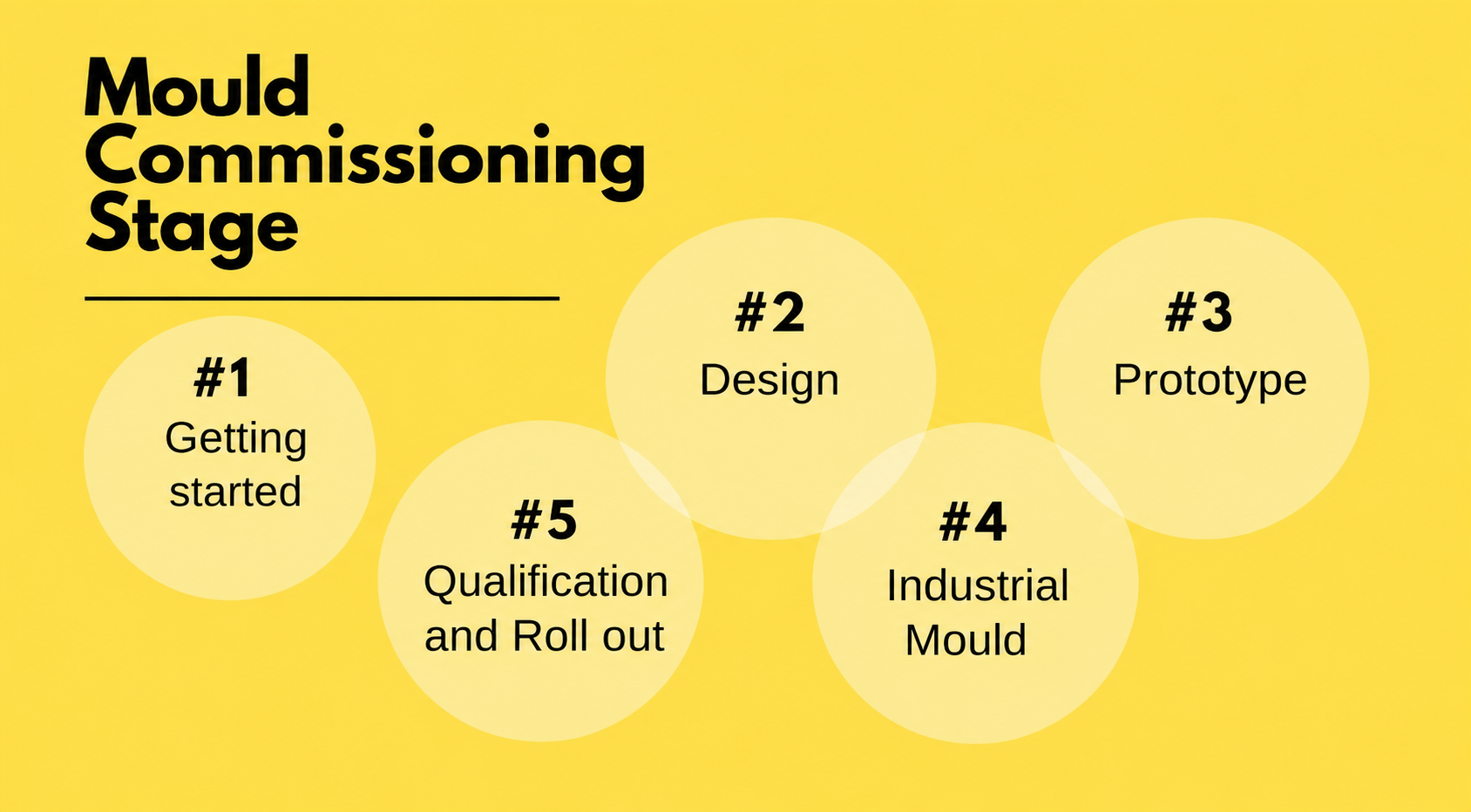
Key commissioning steps
Getting Started: Purchase Order & First Steps
“Every giant building starts with a simple brick. The commissioning starts with a small step, a Purchase Order (PO) to your supplier. This PO is the financial approval to start the mold building process.
Parameters such as previous learnings, cycle time (CT) optimization, integration of new technology and maintenance friendly design are considered based on the mold being innovative or repeat mold.
Technical Design Review and Development
The Mold Manager is responsible for ensuring the technical preparation is completed and that the entire team is aligned on the general design of the mold.
Preparation includes:
- Sharing parts details to the mold maker
- PO issued for work required
- Call out initial design review meetings
- Mold and machine compatibility checks
- Any other project specific requirements.
The usual attendees are:
- Mold molder
- Mold Supervisor
- Supplier
- Mold / Brand Owner (optional)
- R&D team
- SME
You do it right here, you don’t have inefficiencies down the line.
Prototype Production and Tests
If it’s a new product launch, build the prototype after design discussions.
The prototype :
- Single or multi cavity mold can be
- Is tested in trials to test mold performance.
- Validates functional, dimensional and esthetic features of the plastic part
This step can be skipped for repeat molds if the molder has confidence in previous experience.
Industrial / Production Molding
Before the industrial mold design is finalized, the prototype stage is discussed, if any.
Lead time will be reconfirmed by mold maker once approval is given. New learnings could affect timelines.
This is where the product starts to take shape and the system is constructed in production readiness.
Qualification & Roll Out
The most important checkpoint is the mold trial, the last gate before the go-ahead for production.
The first mold trial is preferably performed in the manufacturing workshop. Retrials should be held at the same place of production.
Trials are conducted in stages:
- First short test: Function and aesthetics of parts (1)
- Final trials: Check dimensions and functionality of mold steel and conformity of part
Once the stakeholders have approved the samples, they are shipped to the production site where the mold is trialed again before it is released for full-scale production.
Science of Mold Trials Injection Molding & Process Optimization
As mold managers we make sure that Scientific Injection Molding tests are done and Balance of Fill is verified to optimize the process window.
The samples are tested on the filling lines for their compatibility with the entire filling and assembly system. This comprehensive strategy circumvents integration problems right away and increases the overall reliability of production.
Recording and Approval of Trial Results
All mold trials should be documented thoroughly for future reference.
The documentation shall include:
- CT showed up
- Observed problems
- Remedial measures
- Main dimensions of mold
- Large component dimensions
- Product Details
- Parameters of process
- Other mold-specific information
Once the trials are successfully completed and the samples are approved by the stakeholders, the mold is ready for shipment and production roll out.
Guidelines to Mold Managers for Commissioning
Structured execution allows predictable and controlled commissioning.
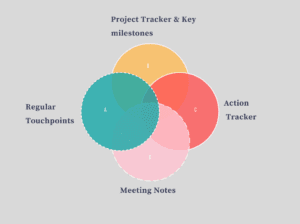
Routine Touchpoints
Often the mold manufacturing team and production team are different so regular touchpoints are key to update all stakeholders and address specific call-outs or requests.
Milestones and Project Tracker
A project tracker shows the big picture timeline and highlights important milestones such as:
- Build of mold complete
- Shipping of materials
- Mold trials
- Mold dispatch
Other milestones could include assembly machines, IML machines, and readiness of ancillary equipment.
Activity Tracker
Tracking open actions and seeing them to resolution before target dates avoids delays in roll-out.
Meeting Minutes
The formal recording of weekly discussions brings clarity, accountability and creates a valuable historical reference for future projects.
Conclusion: Synchronization of the Mold Lifecycle Chain for Successful Production
What starts as an idea in the planning phase becomes a reality at commissioning. Only if all links of the mold lifecycle management chain are synchronized, robust, functional and esthetically pleasing molds can be produced.
From its inception Efficient Innovations has successfully qualified thousands of Injection & Blow Molds for a number of clients around the globe. We are now an integral part of our client’s Mold Management Teams
Visit www.efficientinnovations. Contact us for more details.
FAQs
- Mold Lifecycle Management (MLM) – What is mold commissioning?
Mold commissioning is the systematic process of converting a designed mold into a production ready tool. Design validation, prototype trials, industrial mold construction, qualification and final approval are included before the mold is released for commercial production.
- Why commissioning is important for a successful production mold
The commissioning tests the mold to ensure it works as intended in real production conditions. It tests functionality, dimensional accuracy, esthetics and process stability to minimize risks in mass production and to ensure that the mold is market compliant.
- The key stakeholders involved in the mold commissioning process?
The primary stakeholders are typically the mold maker, mold manager, R&D team, subject matter experts (SMEs), suppliers and sometimes the brand or mold owner. Their alignment guaranties technical accuracy, timely execution and successful qualification.
- When is a prototype mold required in the commissioning phase?
A prototype mold is needed for new product introduction or where design uncertainty exists. Functionality, dimensional performance and esthetics are tested before going to full scale production mold.
- What role do mold trials play in determining mold readiness for production?
Mold trials are used to assess functionality, part quality, dimensional conformity, and process consistency. They will approve the mold for production use once the mold steel, process parameters and cycle time are checked to be in specification.
- What is the function of scientific injection molding in mold qualification?
With scientific injection molding you are able to develop a stable and optimized process window. It concerns parameters like balance between fill and behavior of the material as well as reproducibility, robustness of the process and long term stability of production.
- During mold trials what number of key parameters should be logged?
The documentation should include cycle time achieved, mold and part measurements, material details, process parameters, issues observed, corrective actions and mold specific data that is critical for future reference and troubleshooting.
- Why is it important to have regular touchpoints and project tracking during mold commissioning?
Regular touchpoints to ensure build and production teams are on the same page. Managing timelines and closing out open actions quickly – project tracking and milestone monitoring means no delays during mold roll-out.